Climb into your roof space on a summer afternoon and you’ll understand the problem instantly — it’s an oven up there. All that trapped heat radiates down through your ceilings, fights your air-conditioning, and makes the upstairs and west-facing rooms uncomfortable well into the evening. Roof ventilation lets that hot air out.
Quick answer: Roof ventilation is the use of vents — most commonly wind-driven whirlybird turbines — to flush built-up heat, damp and condensation out of a roof space. Installing it involves assessing the roof’s size and layout, working out the right number and placement of vents (one alone barely moves the air on a large roof), and fitting each vent with proper flashing and sealing so it never leaks. Good ventilation keeps a home cooler in summer, eases the load on air-conditioning, and clears the moist air that causes mould and timber damage.
Why it matters so much on the Downs
Roof ventilation is one of the most under-rated improvements you can make to a Darling Downs home. Our summers are genuinely hot, and a poorly ventilated roof cavity acts like a heat store — soaking up the day’s sun and slowly radiating it down through your ceilings well into the night. That’s the heat that keeps bedrooms uncomfortable and forces your air-conditioning to work overtime. Moving that hot air out makes the whole house easier to cool and cheaper to run. And in the cooler, damper parts of the region it does an equally important job at the other end of the year — clearing the moist air that would otherwise cause condensation, damp and mould in the roof space. It’s a small, affordable bit of work that pays you back every single season.
What good ventilation does
- Cuts summer heat — vents built-up hot air out of the roof space instead of letting it soak into your home
- Eases the load on your aircon — a cooler roof space means your cooling doesn’t work as hard or cost as much
- Clears damp and condensation — lets moist air escape so it doesn’t sit in the roof and cause mould or timber problems
- Protects your roof — a drier, cooler roof space is easier on insulation, sarking and structure
- Helps your insulation work — wet or super-heated insulation doesn’t insulate well; ventilation keeps it doing its job
Signs your roof space isn’t ventilating well
You don’t have to climb into the roof to tell ventilation is lacking — the signs usually show up in the living space below:
- Upstairs or west-facing rooms that stay hot long after the sun’s gone down
- Air-conditioning that struggles to keep up and runs up big summer bills
- A roof cavity that’s stifling when you do put your head up there
- Condensation, musty smells or damp patches in the roof space, especially in the cooler, greener parts of the Downs
- Early signs of mould on ceilings or in the roof void
Any of these means hot, moist air is sitting trapped in your roof instead of escaping — and that’s exactly what ventilation fixes.
Whirlybirds and vents, properly specified
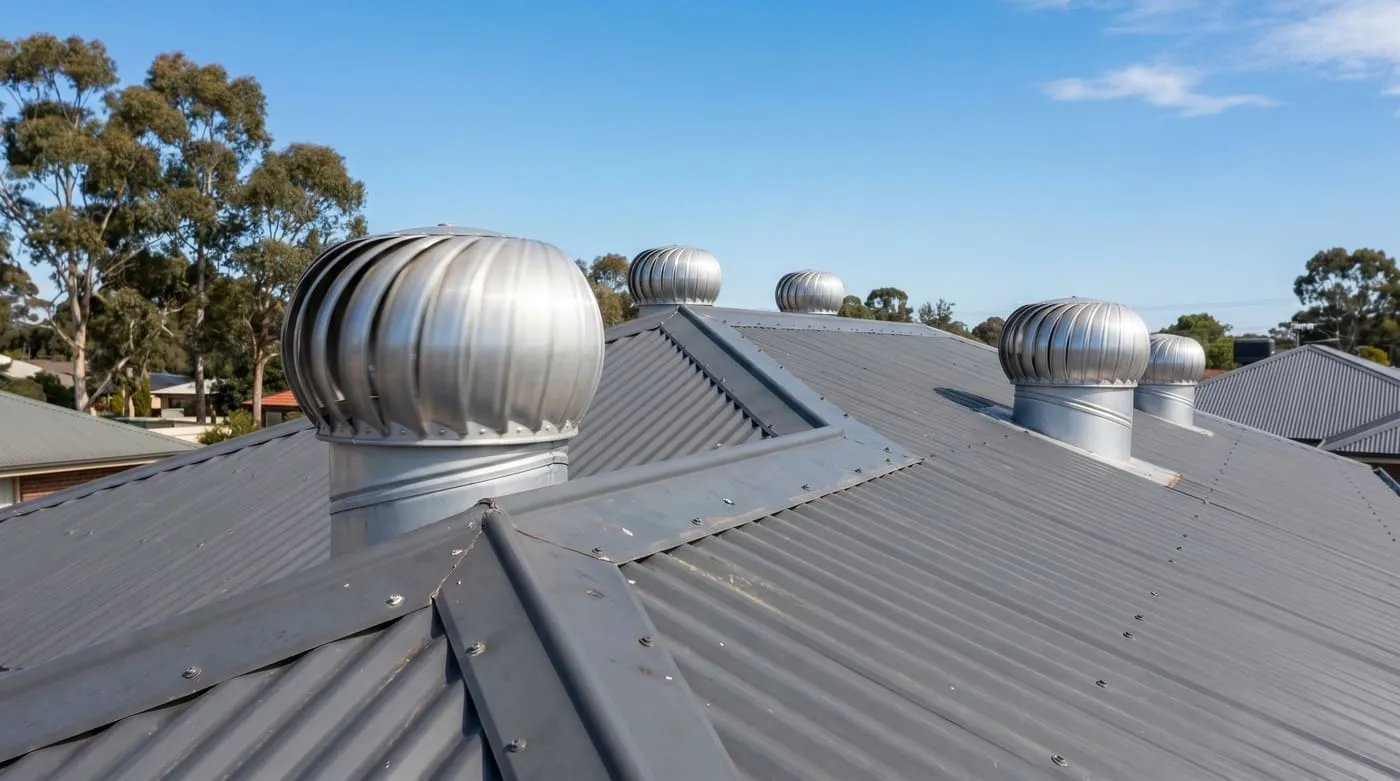
The most common solution is the humble whirlybird — wind-driven turbine vents that spin and draw hot air out. The trick most people miss is how many. One whirlybird on a big roof barely moves the air; the right number for your roof area makes a real, felt difference. We work that out properly and recommend what your roof actually needs — not whatever’s easiest to sell.
We install whirlybirds and other roof vents with correct flashing and sealing, so they do their job for years without ever becoming a leak.
How we install roof ventilation
Good ventilation is about airflow, not just bolting on a vent, so we start by assessing your actual roof space — its size, pitch, layout and what (if anything) is already there. A roof cavity needs both an exit for hot air up high and a way for cooler air to be drawn in lower down; get the balance wrong and even several vents barely move the air. We work out the right number and placement for your roof so the system actually flushes the heat out rather than just looking the part.
Installation itself is quick but exacting. We cut the opening cleanly, set the vent on the correct pitch so it sheds water, and — the critical part — flash and seal it properly into the surrounding roof. A whirlybird is a hole in your roof, after all, so the flashing is everything: done right it’s watertight for the life of the roof; done badly it becomes the leak you call someone else about. We tidy up and test as we go, and you’re left with vents that spin freely and a roof space that breathes.
The products we use
We fit quality wind-driven turbine vents (whirlybirds) and fixed vents from reputable manufacturers, sized appropriately for your roof — not the flimsiest unit that’ll seize up or rattle apart in a couple of Downs storm seasons. The bearings, the blade material and the flashing base all matter for how long a whirlybird keeps working, so we use units built to last in our conditions. Where a powered or solar vent suits the situation better, we’ll talk you through that option too. Every vent goes in with proper flashing and roofing-grade sealant rated for our UV.
Honest advice and clear pricing
Here’s where we differ from the hard-sell mob: we’ll only recommend the number of vents your roof genuinely needs. Over-selling ventilation is an old trick, and we won’t put a dozen whirlybirds on a roof that needs four. After we’ve assessed your roof space, you get a fixed, itemised quote covering the vents and the installation, with no surprises — and an honest opinion on whether ventilation alone will solve your heat problem or whether insulation and a heat-reflective coating should be part of the picture too. The work is backed by our written workmanship guarantee.
A natural pair with restorations and re-roofs
Ventilation works best alongside good insulation and a heat-smart roof. If you’re already booking a roof restoration, re-roof or heat-reflective coating, it’s the perfect time to sort the ventilation too — your summers will be noticeably more bearable, and you’ll be making the most of the access while we already have it. It’s a small, affordable add-on that quietly improves your home’s comfort for years. Get a free quote and we’ll assess your roof space and recommend exactly what it needs.