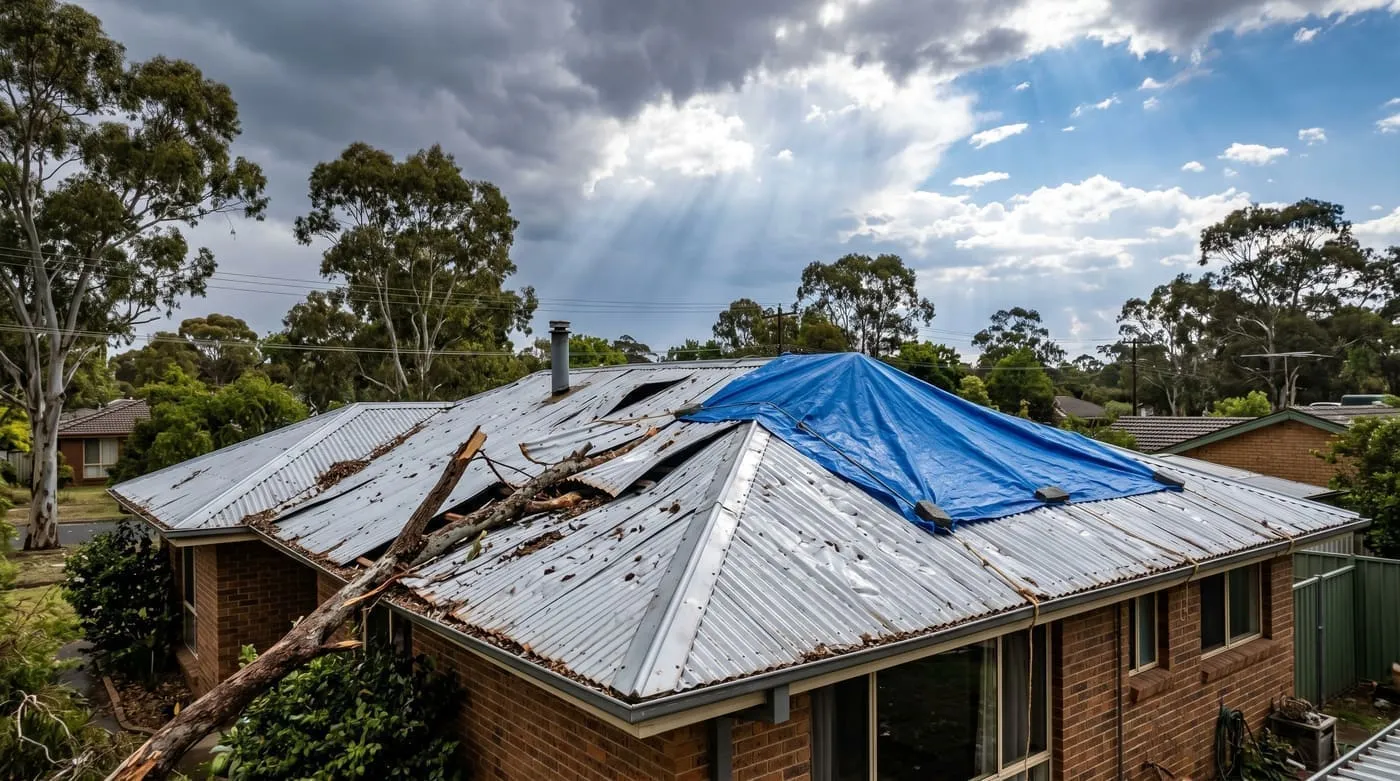
When a storm rolls off the range and dumps hail and wind on Toowoomba, roofs take the hit — and the phone starts ringing. Lifted sheets, smashed tiles, dented gutters, branches through the roof, water pouring into ceilings. It’s stressful, it’s urgent, and it’s exactly what we’re here for.
We do two things in a storm: get you safe and dry fast, and take the insurance headache off your plate.
Quick answer: Storm and insurance roof repair runs in two stages. First the emergency make-safe — getting out fast to secure or tarp breached areas, clear dangerous debris and stop more water getting in, which limits damage to ceilings, insulation and belongings. Then the permanent repair once the insurer approves it: replacing damaged sheets or tiles, re-bedding dislodged capping, repairing dented gutters and flashings. Throughout, the roofer documents the damage with detailed photos and reports the way assessors expect and liaises directly with the insurer, so the claim moves and isn’t knocked back.
First priority: make it safe
If water’s coming in, every hour counts. We get out as fast as we can, secure and tarp the damaged areas, clear anything dangerous, and stop more water getting into your home. This make-safe work limits the damage to your ceilings, insulation and belongings — and it’s typically covered as part of your claim.
Then we handle the claim
Here’s where most homeowners get stuck. Insurers want specific, detailed evidence of storm damage, and a vague quote or a few phone photos often isn’t enough — claims get delayed or knocked back.
We document storm and hail damage the way assessors want to see it:
- Detailed photos of every damaged area, close-up and in context
- A clear written report of what’s damaged and why it needs repair or replacement
- An itemised quote that stands up to scrutiny
- Direct liaison with your insurer and their assessor
You’re not left trying to translate between a roofer and an insurance company — we bridge that gap, so your claim moves and you get the repair you’re entitled to.
Why the Darling Downs gets hit so hard
The Darling Downs sits in one of Queensland’s most active severe-storm corridors. Through spring and summer, powerful cells build over the Great Dividing Range and sweep across the region, bringing large hail, destructive winds and torrential rain — often with little warning. Toowoomba, Highfields and the surrounding towns cop more than their share, and the elevation and exposure only add to it. For roofs, that means storm damage isn’t a rare event out here — it’s an almost-annual reality somewhere across the region.
That’s exactly why we’ve built so much of what we do around storm response. We’re local, so when a cell goes through we’re already here, not driving in from the coast. We know what hail does to a Colorbond roof versus a tile one, where wind tends to lift sheets and capping, and what an assessor needs to see to approve a claim. When the weather hits your place, that local storm experience is the difference between a fast, smooth repair and a drawn-out headache.
Common storm and hail damage we repair
- Dented, lifted or torn metal roof sheets
- Cracked, chipped or shattered tiles
- Displaced or broken ridge capping
- Dented gutters, downpipes and whirlybirds
- Impact damage from fallen branches and debris
- Water ingress, leaks and ceiling damage
Hail damage you can’t always see
A lot of hail damage isn’t obvious from the driveway. Metal roofs get dented, coatings get pock-marked and shed their granules into the gutters, and small cracks in tiles open up into leaks weeks later. If a serious storm has been through your area, it’s worth getting a proper inspection even if the roof looks okay — we’ll tell you straight whether there’s claimable damage.
How the make-safe and repair work
Storm jobs run in two stages, and we’re set up for both. First, the emergency make-safe: we get out fast, secure or tarp the breached areas, clear dangerous debris, and stop more water getting into your home. This limits the damage to your ceilings, insulation and belongings while the claim and the permanent repair are sorted — and it’s typically covered as part of your claim. Second, the permanent repair once your insurer approves it: we replace damaged sheets or tiles, re-bed and re-point dislodged capping, repair or replace dented gutters and flashings, and restore the roof to a standard better than it was before the storm.
For the permanent work we use quality, matched materials — genuine Colorbond and matching tiles, proper flashings and roofing-grade sealants — so the repair lasts, rather than the cheap patch-up that storm-chasers are known for.
Transparency and why local matters after a storm
Here’s something worth knowing: after every big storm season, out-of-town operators flood the Downs chasing insurance work, do rushed repairs, and vanish — leaving homeowners with nobody to call when the “fix” fails. As a genuinely local business, we’re still here long after the job’s done, and our reputation lives right here in the region. Our pricing and documentation are transparent — detailed, itemised quotes and reports that stand up to an assessor’s scrutiny — and we’ll never inflate a claim or pressure you into work the damage doesn’t warrant. We deal with your insurer honestly, you stay in control, and the repair is backed by our written workmanship guarantee.
Local, fast, and on your side
We’re based right here on the Downs, so when the weather hits, we’re not driving in from the coast — we’re already here. We make it safe, we document it properly, we deal with the insurer, and we repair it to a standard better than before the storm. From the first emergency tarp to the final repair and sign-off, you’ve got one local team handling the whole thing — no chasing, no being passed around, no operator who’s moved on to the next town.
The key thing to remember after a storm is to act quickly but stay off the roof — a storm-damaged roof is genuinely dangerous, with loose sheets and hidden weak spots. Document what you can safely see from the ground, get a bucket under any active leak, and call us. We’ll handle the rest, from making it safe to getting your claim across the line and restoring the roof properly.
Storm just hit? Call us now — and if you can do it safely, grab a few photos of the damage before you ring.