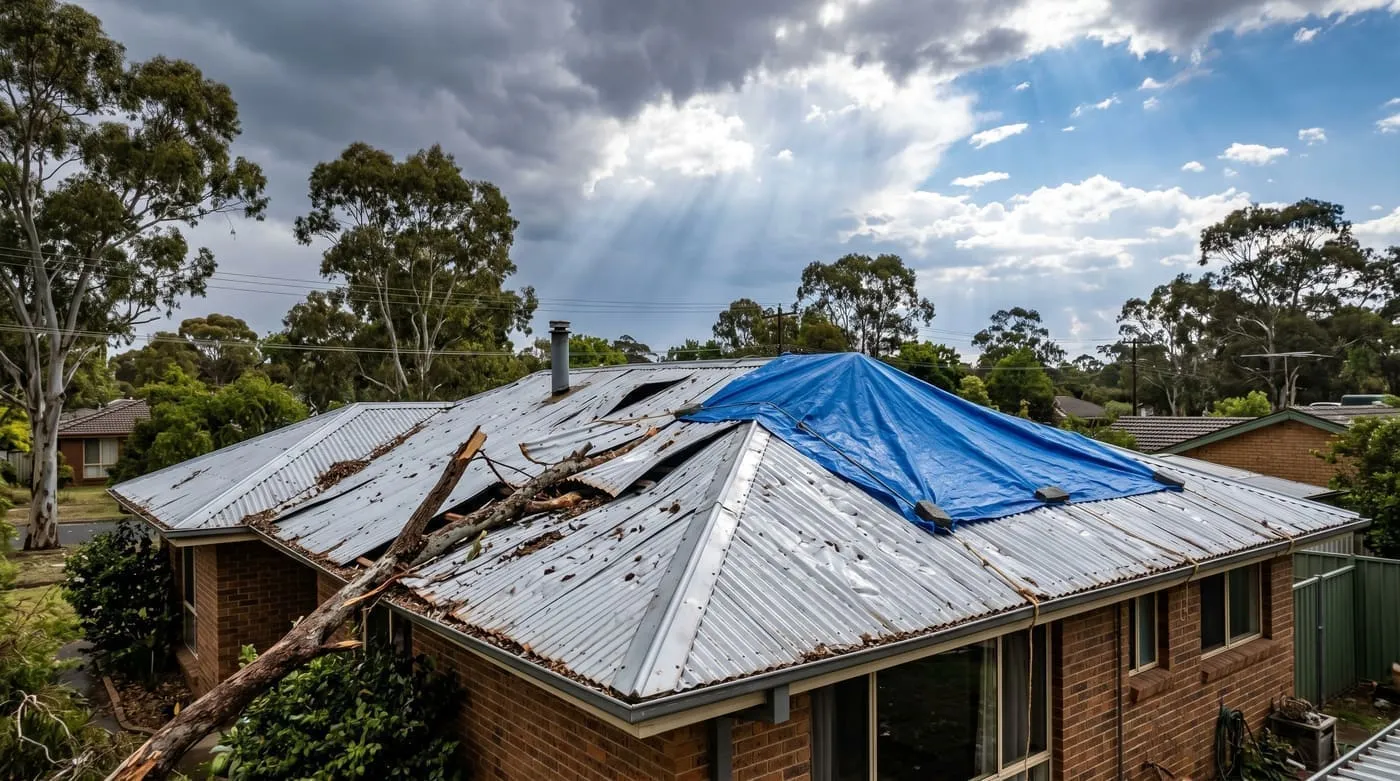
A storm’s been through, your roof’s taken a hit, and now you’re facing an insurance claim. Done right, it’s straightforward. Done poorly, claims get delayed or knocked back. Here’s the process, step by step.
Quick answer: To make a roof insurance claim in QLD: document the damage thoroughly with dated photos, prevent further damage with safe temporary measures (and keep receipts), then lodge the claim with your insurer as soon as possible, quoting your policy number. Get an independent licensed roofer’s assessment and written quote, keep all paperwork, and don’t authorise permanent repairs until the insurer confirms what’s approved. Acting quickly and documenting well gives the claim its best chance.
General guidance only — always follow your insurer’s specific requirements.
Step 1: Make the roof safe (and document it)
If water’s getting in, stopping further damage comes first — and it’s usually covered. Tarp or secure the area if you can do so safely, or get a roofer out for an emergency make-safe. Photograph the damage before you cover it up.
Step 2: Document everything thoroughly
This is the step that makes or breaks a claim. Gather:
- Clear photos of all the damage — wide shots and close-ups
- Photos of dented gutters, downpipes and whirlybirds (great evidence of hail)
- The date and details of the storm event
- Any interior damage — ceiling stains, wet insulation
Step 3: Get a professional report and quote
Insurers and their assessors want a proper roofer’s report describing the damage and an itemised repair quote. A vague estimate invites push-back; a detailed, professional assessment supports your claim. We provide exactly this — documentation to the standard assessors expect.
Step 4: Lodge your claim
Contact your insurer, give them the event details and your evidence, and lodge the claim. Keep records of every conversation and reference number.
Step 5: The assessment
The insurer may send an assessor to inspect. This is where good documentation pays off — and where having a roofer who can speak directly to the assessor and back up the claim really helps. We liaise with assessors regularly so the technical side is handled.
Step 6: Approval and repair
Once approved, the permanent repair goes ahead — ideally restoring the roof to better than it was before the storm.
Can you choose your own roofer?
A lot of people assume the insurer’s repairer is the only option. Often you have more say than you think. Some policies let you nominate your own contractor; others will appoint one but still consider a quote you provide, particularly if you’ve had a long relationship with a local roofer who knows your roof. It’s worth asking the question early rather than just accepting whoever’s assigned. If you do want to use your own roofer, get that on the table when you lodge, and make sure their quote is detailed enough to stand next to the insurer’s. We’re happy to be that roofer for Toowoomba and Darling Downs homeowners, and to quote against an insurer’s scope so you can compare like for like.
What documentation actually wins claims
Step 2 says “document everything”, but it’s worth being specific about what good documentation looks like, because this is the single biggest lever you have. Aim for:
- Dated photos — most phones stamp the date automatically, which quietly proves the timing of the damage relative to the storm.
- Wide and close shots of the same damage — the wide shot shows where it is on the roof, the close-up shows what it is. Assessors want both.
- The “before” of any make-safe — once you’ve tarped something, the only proof of what was underneath is the photo you took first.
- Interior evidence — ceiling stains, wet insulation, water marks down a wall. These tie the roof damage to actual harm inside the home.
- A weather record — a note or screenshot of the storm date and any official warnings for the area. It anchors your claim to a real event rather than your word for it.
The point of all this isn’t to be difficult. It’s to remove the assessor’s reasons to say no. A claim backed by clear, dated, complete evidence is simply harder to knock back than one that leaves gaps to argue over.
How long does a roof claim take?
Honestly, it varies — and a lot of it is outside your hands. After a big storm rolls through the region, insurers and assessors are dealing with hundreds of claims at once, so the queue alone can add time. What you can control is how clean your claim is going in. A complete, well-documented claim moves faster because nobody has to come back to you for more information. A vague one stalls while everyone chases the gaps. Booking your roofer’s assessment promptly, rather than waiting weeks, also helps — both for the timeline and because prompt reporting is what insurers expect.
Renting, or it’s an investment property?
The process is much the same, but the paperwork sits with the owner or their landlord insurance, and the make-safe still needs to happen quickly to protect the building and any tenants. If you’re the tenant, your job is to report the leak to the property manager or owner straight away and keep your own photos; the claim itself is the owner’s to lodge. Landlord and building policies have their own rules, so the owner should check their schedule — the same way any homeowner should.
Common reasons claims get rejected
- Poor documentation — not enough proof the damage was sudden
- Wear and tear — pre-existing deterioration isn’t covered (more on that here)
- Delayed reporting — leaving it too long after the event
A few common questions
What if my claim gets knocked back? A rejection isn’t always the end. If it came down to insufficient evidence or a dispute over the cause, a stronger roofer’s report can sometimes support a review. Read the reason they gave carefully — it tells you what to address. Our guide on what insurance does and doesn’t cover covers the wear-and-tear arguments that trip people up.
Do I pay the roofer or does the insurer? It depends how the claim is settled. Sometimes the insurer pays the repairer directly; sometimes they settle with you and you arrange the work. Either way you’ll usually pay your excess. Sort out who’s paying whom before work starts so there are no surprises.
Can I claim for an old leak I just noticed? This is risky territory. The longer the gap between the event and the report, the harder it is to prove the damage was sudden rather than gradual — and delayed reporting is a common rejection reason. If you suspect storm damage, get it looked at and reported promptly rather than sitting on it.
Should I lodge the claim before or after getting a roofer out? Getting the assessment and documentation first means you lodge with strong evidence in hand, which usually makes for a smoother claim. But check your insurer’s process — some want to be notified of the event quickly regardless. Reporting early and documenting thoroughly aren’t mutually exclusive.
Mistakes that slow a claim down
Beyond the common rejection reasons above, a few avoidable missteps tend to drag claims out or weaken them:
- Throwing out the damaged material. That cracked tile or torn sheet is evidence. Don’t bin it before the claim’s assessed — keep it, or at least photograph it thoroughly.
- Doing the full permanent repair too early. Make-safe is fine and expected. A complete repair before the assessor’s seen the damage removes the very thing they need to assess.
- Patchy record-keeping. Every call, claim number, assessor name and date matters. When a claim drags on, the homeowner with a tidy log is in a far stronger position than the one relying on memory.
- Letting it sit. Delay is the enemy of a clean claim — both for the timeline and because prompt reporting is what insurers expect after an event.
- Accepting the first scope without checking it. If the insurer’s scope of works misses damage your roofer can see, that’s worth raising before repairs are agreed, not after.
None of these are complicated to avoid. They just need you to slow down for a moment in the days after a storm, when the temptation is to rush in and fix everything immediately. The instinct to get the roof sorted is the right one — just take the photos and make the calls in the right order first, and your future self dealing with the assessor will thank you.
How we fit into the process
To be clear about where a roofer helps and where we don’t: we can’t lodge your claim for you, can’t tell you what your specific policy covers, and can’t promise an outcome — that’s all between you and your insurer. What we do is the roofing side of it. We get out for an emergency make-safe to stop further damage, we inspect and document the damage to the standard assessors expect, we provide a detailed report and itemised quote, and we’ll speak directly to your assessor about the technical detail when that helps. Then, once it’s approved, we do the repair. The aim is simple: take the roofing headache off your plate so you can deal with the paperwork side without also trying to work out what’s wrong with your roof.
We make it easier
Storm and insurance work is core to what we do — make-safe, documentation, assessor liaison and the repair itself, across Toowoomba, Highfields, Gatton, Oakey and the wider Darling Downs. Get in touch and we’ll take the headache off your plate.