
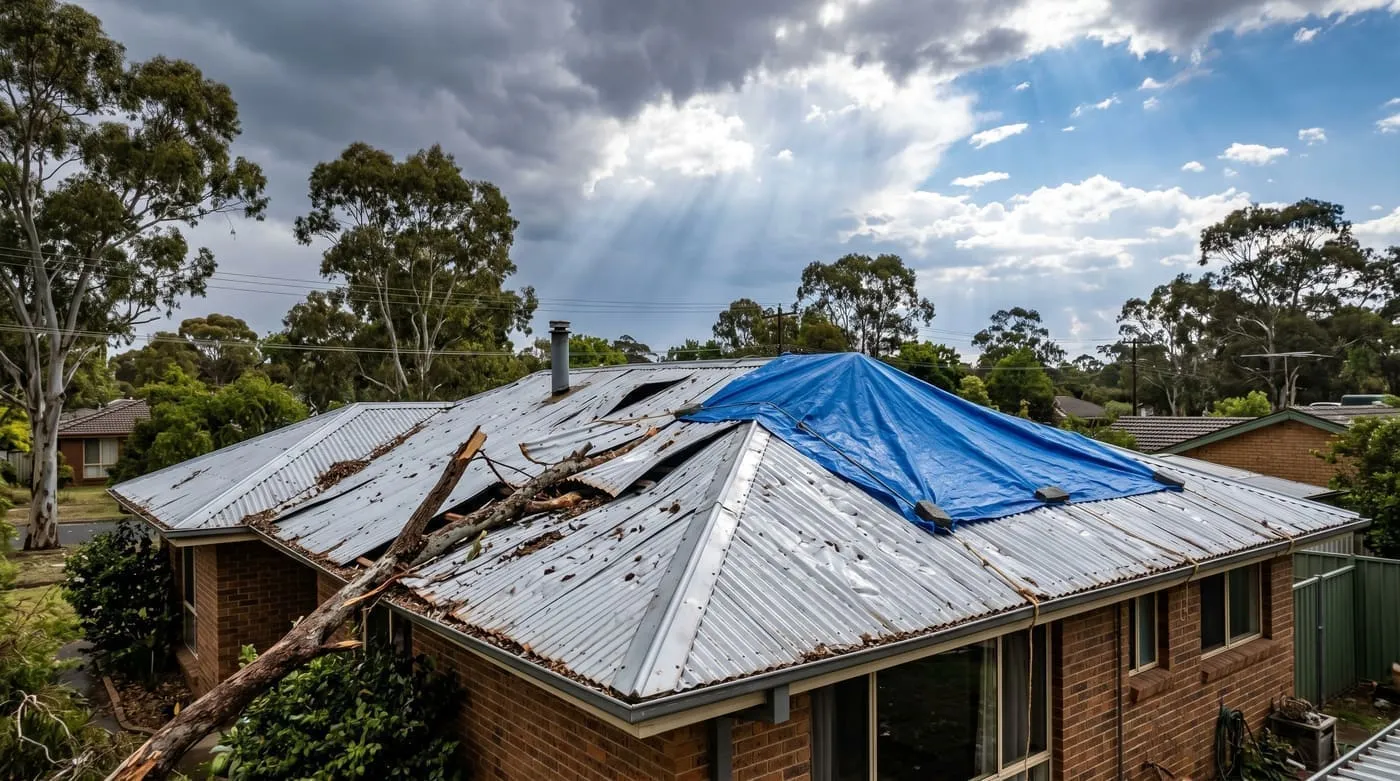
The Darling Downs cops its share of hail, and the frustrating thing is that hail damage often doesn’t announce itself. The roof can look fine from the driveway while the surface is quietly compromised — and small damage left unchecked turns into leaks weeks later. Here’s what to look for after a hailstorm.
Quick answer: Signs of roof hail damage include dents or dimples in metal sheets, gutters and flashings; cracked, chipped or shattered tiles; granules from coatings collecting in gutters and downpipes; and damaged whirlybirds, vents or skylights. Much of it isn’t visible from the ground, so after a significant hailstorm it’s worth having a roofer inspect up close — small surface damage left unchecked often turns into leaks weeks later, and prompt documentation helps any insurance claim.
Signs of hail damage
On a metal roof:
- Dents and dimples across the sheets, especially visible in low-angle light
- Dented or pock-marked gutters, downpipes and whirlybirds (often the easiest place to spot it)
- Chipped or scratched paint/coating exposing bare metal
- Loosened or lifted sheets and fixings
On a tile roof:
- Cracked, chipped or shattered tiles
- Dislodged or broken ridge capping
- Granules or coating fragments washed into the gutters
- Visible impact marks on the tile surface
Inside:
- New water stains on ceilings after the storm
- Damp patches or drips in the roof cavity
Why you can’t always see it
Hail damage to the roof surface is often subtle, and the leaks it causes can take weeks to show as the compromised area lets water in bit by bit. By the time the ceiling stains, the damage has been working away for a while. That’s why a check after a significant storm is worth it even if everything looks okay.
Why the Darling Downs gets hammered by hail
If it feels like Toowoomba and the surrounding region cops more than its fair share of hail, that’s not your imagination. We sit on the edge of the Great Dividing Range at around 700 metres elevation, and that altitude — combined with the heating that builds over the plains through spring and summer — is a recipe for big, fast-developing storm cells. Late afternoon storms roll up off the range and dump on towns like Highfields, Crows Nest, Oakey and Pittsworth on a regular basis through the warmer months.
Two things make the local hail risk worse for roofs. First, the stones here often arrive with strong wind behind them, so they hit the roof at an angle rather than straight down — that drives damage into the side of ridge caps, sheet ribs and flashings you’d never see from the ground. Second, our storms tend to be short and violent. A cell can pass through in fifteen minutes and leave a roof that looks untouched from the street but is peppered with dents and micro-cracks. If you’ve lived through a storm season here, you already know how quickly the sky can turn.
This is also why two houses on the same street can come out of the same storm with completely different outcomes. Hail swaths are narrow and patchy. Your neighbour might have a smashed skylight while your roof took a glancing hit that only a close inspection will reveal. Never assume you’re fine just because the place next door looks okay — or the other way around.
Metal vs tile: how the damage differs
The material on your roof changes both what hail does to it and how you go looking for the damage.
On a metal (Colorbond or similar) roof, hail dents the sheets and, more importantly, can chip or crack the protective coating. The steel underneath is fine for now, but once that coating is broken the bare metal is exposed to weather and will start to corrode over the following months and years. The dents themselves are often cosmetic; the coating damage is the part that shortens the roof’s life. Pay close attention to the high points — the ribs and the crests of the corrugations — because that’s where stones strike first. Our page on Colorbond roofing explains more about how these coatings work.
On a tile roof, hail tends to crack, chip or shatter tiles outright, and it knocks the bedding and pointing on the ridge caps loose. A cracked tile might still sit in place looking fine, then let water through every time it rains. Concrete tiles also carry a surface coating that hail can strip, exposing the porous concrete to soak up water. If you’ve got tiles, our tile roof repairs page covers how we put these right.
The role your gutters play as evidence
We mention gutters and downpipes a lot, and there’s a good reason. They’re usually the easiest place to confirm a hailstorm actually hit your property hard enough to do damage — soft aluminium and the flat tops of gutters and the rounded backs of downpipes dent easily and obviously. If your gutters are pocked but the roof “looks fine”, that’s a strong hint the roof took hits too; the roof is just better at hiding them.
Dented gutters matter for another reason: they can stop draining properly. A gutter that’s been dished in by hail holds water, which speeds up rust and can overflow back under the roof line in the next downpour. So even where the roof sheets survived, hail-damaged gutters are worth getting looked at on their own.
Don’t get on the roof yourself
Roofs are dangerous, and storm-damaged roofs doubly so — loose sheets, slippery surfaces, hidden weak spots. Check what you can from the ground (binoculars help) and look at the gutters and downpipes, but leave the climbing to someone with the gear and the insurance.
What a hail inspection actually involves
When we come out after a storm, the inspection is more thorough than a look from the ladder. We get up on the roof safely and check the high points of the sheets or the tile surfaces for impact marks, look closely at whether the coating has been chipped or cracked rather than just dented, and check the ridge caps, flashings and any roof penetrations like vents and skylights where hail and wind do concentrated damage. We look at the gutters and downpipes as supporting evidence, and we check the roof cavity from inside for any early signs of water entry. Then we document all of it with photos — because if there’s claimable damage, that record is what supports your case.
The reason this matters is that the damage that costs you money later is rarely the damage you’d notice yourself. A confident, experienced eye knows the difference between a harmless surface dent and a coating breach that’ll rust, between a tile that’s fine and one that’s quietly cracked. That judgement is most of what you’re paying for.
What to do if you suspect hail damage
- Photograph anything you can see safely — including dented gutters
- Don’t get up on the roof yourself
- Get a professional hail damage inspection
- If there’s claimable damage, we’ll document it properly for your insurance claim
After a big storm, a quick inspection is cheap insurance against an expensive leak. Book one here.
How soon after a storm should you act?
Sooner is better, for two reasons. The practical one: small breaches let water in slowly, so the longer a damaged roof sits, the more chance you’ve got of soaked insulation, stained ceilings and timber that starts to rot. Catching it early keeps the repair small.
The other reason is to do with insurance. Most insurers expect you to report storm damage promptly and take reasonable steps to prevent further damage once you know about it. A roof you got checked in the days after a storm is a much cleaner claim than one you only looked at six months later when the ceiling finally gave way. If you think you might need to claim, our guides on whether insurance covers roof leaks and how to make a roof insurance claim walk through what’s involved.
Common questions about hail damage
Will a small dent really cause a leak? Not always — but it can. On metal, the risk isn’t the dent itself, it’s whether the coating cracked. On tiles, even a hairline crack you can barely see will pass water. That’s the trap with hail: the damage that leaks is often the damage you can’t spot from the driveway.
My roof is only a few years old — could it still be damaged? Yes. Age doesn’t protect a roof from hail. A brand-new Colorbond roof and a twenty-year-old one will both dent and chip under a decent stone. A newer roof is sometimes more worth checking, because catching coating damage early protects an asset you’ve barely started getting value out of.
Can I just wait and see if it leaks? You can, but it’s a gamble. By the time a leak shows itself the water’s already been getting in, and you may have missed the window to report it cleanly to your insurer. A short inspection now is far cheaper than ceiling repairs and a contested claim later.
Do I need a roofer, or can my regular handyman check it? You want someone who knows roofs and works on them safely. Identifying hail damage — especially the subtle coating and pointing damage — takes an eye that’s seen a lot of storm roofs. It’s also the documentation that matters if you end up claiming, and a proper roofer’s report carries weight with an assessor that a handyman’s note won’t.
If a storm’s been through the Toowoomba region and you’re not sure where you stand, get a storm damage inspection booked. We cover the whole Darling Downs, we’ll tell you straight whether there’s claimable damage, and if there is we’ll document it properly. Get in touch.