
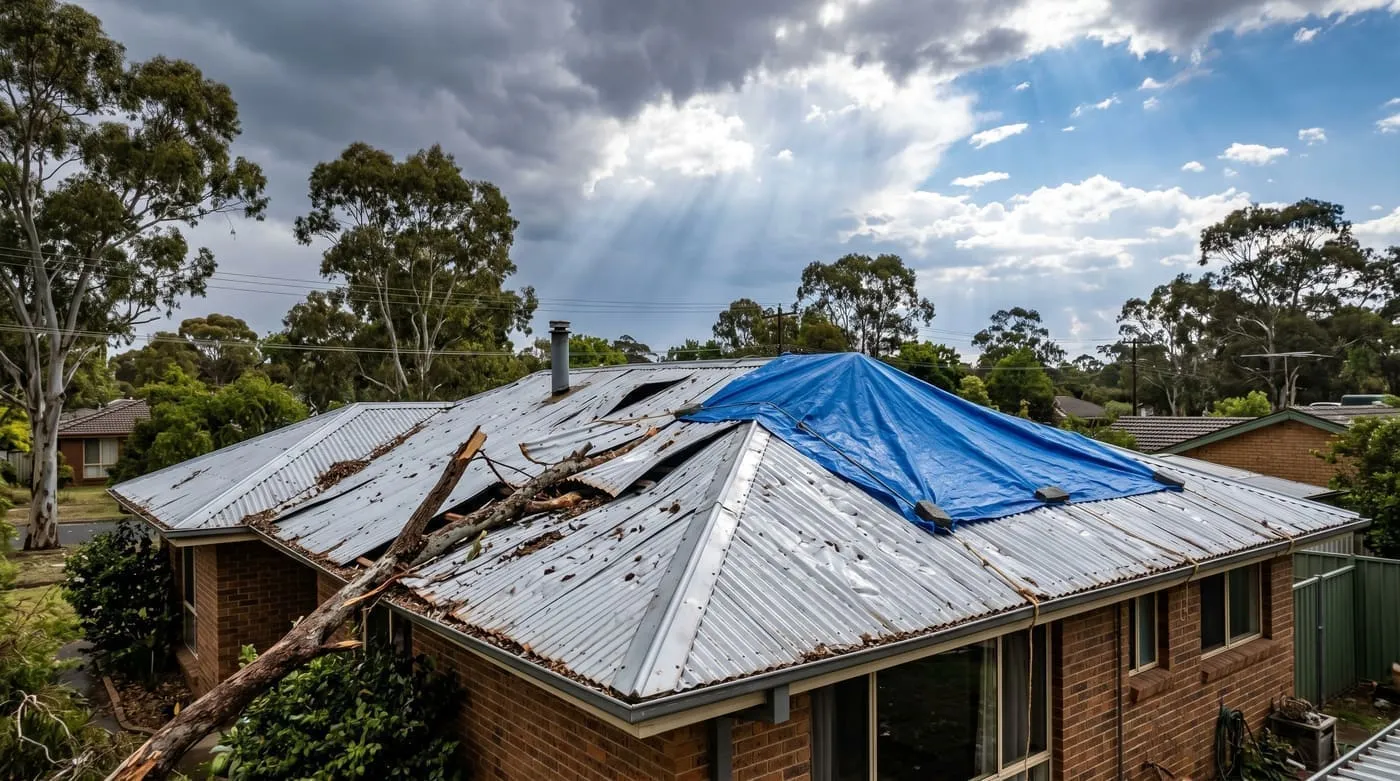
Every spring and summer, the Darling Downs braces for storm season — and the roofs that come through best are the ones that were ready before the first cell rolled off the range. A bit of preparation now saves a lot of damage, stress and expense later. Here’s how to get your roof storm-ready.
Quick answer: To prepare a Darling Downs roof for storm season, do it before spring: clear gutters and downpipes so heavy rain drains fast, check and re-secure loose sheets, tiles, flashings and fixings, trim overhanging branches that could fall or scrape, and have any known weak spots repaired early. Confirm your insurance is current and document the roof’s condition with photos. A roof that’s clear, secure and in good repair before the first storm comes through is the one that survives the season without damage.
Before the season: get ahead of it
Book a pre-season inspection. The best time to find a loose sheet or cracked ridge cap is on a calm day, not when it’s already leaking in a downpour. A quick inspection catches the weak points while they’re easy to fix.
Sort the small stuff now. Those minor repairs you’ve been putting off — a few cracked tiles, a bit of lifted flashing — are exactly what turns a storm into a disaster. Storms find every weakness. Fix them first.
Clear your gutters and valleys. Blocked gutters can’t cope with a Downs downpour; they overflow and back water up under the roof. Clear them before the season, and consider gutter guard if it’s a yearly battle.
Check the ridge capping. Cracked, loose pointing is the first thing high winds exploit. If your ridge caps are looking rough, get them re-bedded and re-pointed before the wind does it for you.
Trim overhanging branches. They become projectiles in a storm and scrape the roof in high wind. Cut them back from the roofline.
During and after a storm
Stay off the roof. A storm-damaged roof is genuinely dangerous. Check what you can from the ground.
Document any damage. If you can do it safely, photograph displaced sheets, dented gutters and any interior leaks — useful for insurance.
Call early for emergency repairs. If water’s coming in, emergency make-safe limits the damage to your ceilings and belongings. Storm jobs are our priority — the sooner you call, the sooner we can get you watertight.
Why the Downs is tough on roofs
Our storms bring a brutal combination — large hail, fierce winds and torrential rain, often with little warning as cells build over the range. Roofs that are already tired, cracked or poorly maintained are the ones that fail. A sound, maintained roof shrugs off what a neglected one can’t.
The geography is part of the problem. Cells build up over the Great Dividing Range through the afternoon and roll east across the Downs, and the rapid lift over the escarpment is exactly what feeds the big hail and violent wind gusts. Towns strung along and below the range — Toowoomba, Highfields, Crows Nest, Oakey, Gatton, Pittsworth — sit right in the firing line, often with only minutes of warning once a storm gets going. The rain comes in short, intense bursts too, dumping more water on your roof in twenty minutes than a gutter half-full of leaves can ever cope with.
What storms actually do to a roof
It helps to know what you’re defending against. Hail is the headline threat. It dents metal sheeting and gutters, cracks the surface glaze on tiles, and shreds older, brittle coatings. A lot of hail damage isn’t dramatic from the ground — it’s hundreds of small impacts that quietly shorten the life of the roof and open paths for water.
Wind works on the edges and the weak points. It lifts poorly fixed sheets, peels back flashings, and pries at any ridge cap whose pointing has already cracked. Once wind gets under a sheet or a tile, it can strip a surprising area in seconds. Rain then exploits whatever the hail and wind opened up, plus any gutter or valley that can’t drain fast enough — and that’s how water ends up inside the roof space and through your ceiling. Understanding these three forces is why the prep above matters: every item on that list is closing a door the storm would otherwise walk straight through.
A simple storm-season checklist
If you want a quick run-through to work from before the season starts, this is the short version:
- Book a pre-season inspection and get any known faults fixed while it’s calm.
- Clear gutters, valleys and downpipes so water can actually get away.
- Have the ridge capping checked and re-pointed if the mortar is cracked or loose.
- Trim branches back from the roofline so they can’t scrape or fall.
- Check flashings around chimneys, vents and skylights for rust or lifting.
- Make sure you’ve got photos of the roof’s current condition and a roofer’s number saved.
None of these take long on their own, and together they turn the odds firmly in your favour. Storm prep is really the spring leg of a year-round routine — our season-by-season roof maintenance checklist sets out what to do in each season so nothing important slips through.
After the storm: dealing with damage and insurance
If a storm does get the better of your roof, what you do in the first day or two matters. Once it’s safe, document everything from the ground — clear photos of displaced sheets, dented gutters, debris and any water coming through inside. Put a date on them. This record is what makes an insurance claim straightforward rather than a fight, and it shows the damage as it was before any temporary repairs.
If water’s getting in, call early for an emergency make-safe — a temporary cover or patch that stops further damage to your ceilings and contents while a permanent fix is organised. Don’t let an insurer or anyone else pressure you into a quick patch-up that hides the real damage. Most home policies in Queensland cover storm and hail damage, though it’s worth knowing the difference between sudden storm damage, which is usually covered, and gradual wear, which generally isn’t. We deal with storm-damage and insurance work regularly and can talk you through what’s involved.
Frequently asked storm-season questions
When should I get my roof checked before storm season? Late winter into early spring is ideal — well before the first cells start building over the range. That gives time to fix anything the inspection turns up while the weather’s still calm.
Is it worth fixing minor damage before a storm, or can it wait? Fix it first. Storms are remarkably good at finding small weaknesses — a cracked tile, a bit of lifted flashing — and turning them into major leaks. The minor repair you put off is exactly what fails in the next big blow.
My roof came through last season fine — do I still need to prepare? Yes. A roof that survived one season can have hidden hail damage or loosened fixings that didn’t leak last time but will this time. Every season is a fresh roll of the dice, and condition only goes one way without maintenance.
Should I get on the roof to check after a storm? No. A storm-damaged roof is slippery, may have hidden weak spots, and is genuinely dangerous. Check what you can from the ground, photograph it, and leave the climbing to someone with the right gear and insurance.
Tile and metal roofs in a storm
Different roofs fail in different ways under storm load, and knowing your roof’s weak points helps you prep the right things. On tile roofs, the classic storm failures are slipped or lifted tiles and cracked ridge capping. High winds get under the leading edge of tiles and at any ridge cap whose pointing has already gone brittle, and hail cracks the surface of older, weathered tiles. The most valuable pre-season job on a tile roof is almost always getting the ridge capping sound, because that’s the line wind and water attack first.
Metal roofs tend to fail at the fixings and the edges. Wind lifts sheets that aren’t properly fixed down, peels back flashings, and works loose any screws that have already backed out. Hail dents the sheeting and gutters — usually cosmetic on a sound roof, but a real problem on thin, tired or already-rusted metal. For a metal roof, the prep that pays off is checking that fixings are tight, sheet ends are sitting flat, and flashings are firmly down before the first big blow. Whichever type you’ve got, a roof that’s already tired or neglected is the one that turns a storm into an insurance claim.
Protecting the inside of your home
Storm prep isn’t only about the roof surface. The roof space and ceiling below it are what cop the damage when water does get in, so a few extra steps are worth taking. Make sure your gutters and downpipes drain well clear of the house, because water pooling against the foundations during a downpour finds its way in at ground level as readily as it does through the roof. If you store anything valuable in the roof cavity or a top-floor room directly under the roof, it’s worth knowing where the vulnerable spots are before a storm rather than after.
Good roof ventilation also helps in the longer run, keeping the roof space drier so any moisture that does sneak in during the wet season dries out rather than feeding rot and mould. And keep a torch, a tarp and a roofer’s number somewhere you can find them in the dark, because Downs storms have a habit of arriving with the power already out. None of this stops a storm, but it limits what a storm can cost you once water’s involved.
Get storm-ready
Don’t wait for the first big cell of the season. Book a pre-storm-season roof check and head into summer with one less thing to worry about — and a number to call if the weather does its worst.