It’s a question we get constantly, especially after a storm: will my insurance cover this roof leak? The honest answer is sometimes — and the deciding factor is usually what caused the leak. Here’s how it generally works.
Quick answer: Home insurance in QLD generally covers roof leaks caused by a sudden, insurable event — storm, hail or a fallen tree — but not leaks from gradual wear, age, rust or poor maintenance, which are treated as the owner’s responsibility. The deciding factor is the cause: sudden accidental damage is usually covered; slow deterioration usually isn’t. Always check your own policy wording, as cover and exclusions vary between insurers.
General information only, not insurance advice — always check your own policy and talk to your insurer.
Sudden damage vs wear and tear
This is the key distinction most policies hinge on:
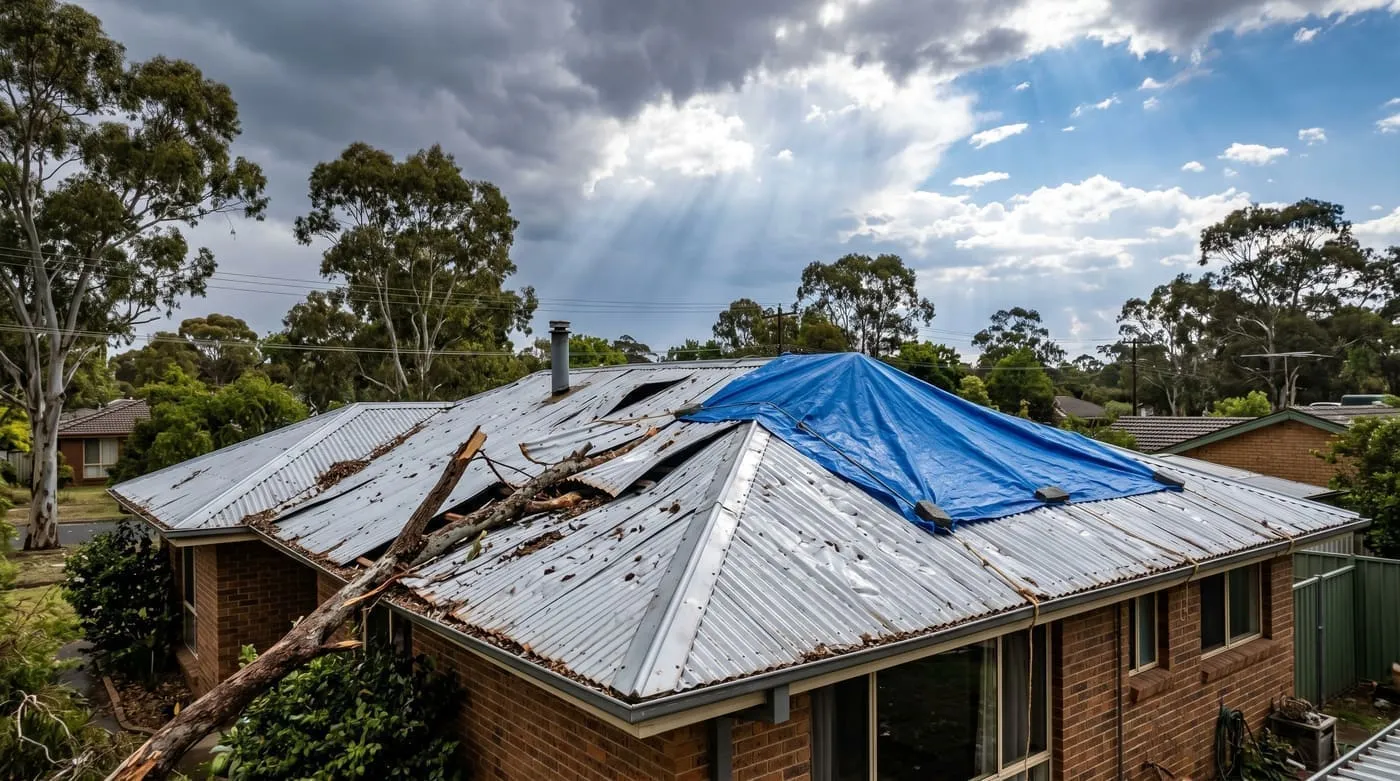
- Sudden, accidental damage is usually covered. A storm lifts your sheets, hail cracks your tiles, a tree branch comes through the roof — that sort of sudden event is typically claimable.
- Gradual wear and tear is usually not. A roof that’s slowly rusted, perished or been poorly maintained over the years is generally considered the homeowner’s responsibility, not the insurer’s.
So a leak from last night’s hailstorm is a very different conversation to a leak from a 30-year-old roof that’s quietly rotted.
Why documentation makes or breaks a claim
Here’s where a lot of valid claims fall over: poor evidence. Insurers want to see clear proof that the damage was sudden and storm-related. That means:
- Clear photos of the damage, close-up and in context
- A professional report describing what’s damaged and why
- An itemised repair quote that stands up to scrutiny
Vague descriptions and a couple of blurry phone photos give the assessor room to push back. Proper documentation gives your claim its best shot — which is exactly what we provide on our storm and insurance repairs.
Maintenance helps your case
Insurers look more favourably on roofs that have been maintained. A roof with a recent restoration or a history of repairs is clearly cared for, which supports a “sudden damage” claim over a “you let it go” rejection.
The grey area: when sudden damage meets an old roof
The cleanest claims are obvious — a tree through the roof last night. The hard ones sit in the middle, and they’re where a lot of Darling Downs homeowners get caught. Picture a roof that was getting on a bit, then a hailstorm finished it off. The insurer may argue the roof was already failing and the storm just exposed it; you’d argue the storm caused the breach. Both can be partly true, and that’s exactly where the outcome turns on evidence rather than opinion.
This is also where the cause of a leak can be genuinely tangled. A blocked, overflowing gutter that pushes water back under the roofline isn’t really storm damage — it’s a maintenance issue. But a gutter torn loose by storm winds is. The same wet ceiling can come from either, and which story the evidence supports makes the difference between a paid claim and a knock-back. Keeping your gutters clear and in good order isn’t just sensible upkeep; it removes one of the easiest reasons an assessor has to point at wear and tear.
What “wear and tear” actually means in practice
It’s worth being clear about this, because people hear “wear and tear” and assume any older roof is uninsurable. That’s not it. Wear and tear refers to the slow, expected deterioration of a roof over its life — fading, surface rust, perished pointing, the gradual stuff that maintenance is supposed to handle. A roof can be old and still be covered for sudden damage, provided it was in reasonable nick before the event. What insurers push back on is using a storm claim to fund repairs for damage that was already there and building for years. The line isn’t age; it’s whether the specific damage you’re claiming was caused by the event.
Excess, sub-limits and the bits people forget
Two things catch people out even on a valid claim. The first is your excess — the amount you pay before the insurer pays the rest. On a smaller repair, the excess can eat most of the benefit, so it’s worth knowing your number before you lodge. The second is that some policies treat storm, flood and accidental damage differently, and may have separate limits or conditions for each. None of this is a reason not to claim; it’s a reason to read your own policy schedule rather than assume. We can’t tell you what your policy says — only your insurer can — but we can make sure the damage itself is documented to a standard that gives the claim its best run.
What to do after storm damage
- Make it safe if you can do so safely (and document it)
- Take photos before any repair work
- Call a roofer for a proper damage assessment and report
- Lodge your claim with that evidence
We handle the make-safe, the documentation and liaising with your assessor so the process is far less stressful. Get in touch if a storm’s been through.
Common questions
My roof leaked in the rain but there wasn’t really a storm — am I covered? Probably not, if there was no sudden event behind it. Rain finding its way through a worn or poorly maintained roof generally reads as wear and tear. Rain getting in through damage a storm just caused is a different matter. The trigger event is what counts.
Does it matter that my roof is old? Age on its own doesn’t disqualify you. What matters is whether the specific damage was caused by a sudden event and whether the roof was in reasonable condition beforehand. A well-kept older roof can absolutely be covered for storm damage.
Should I get the leak fixed before I claim? Make it safe to stop further damage — that’s expected of you and usually covered — but photograph everything first and avoid a full permanent repair until the claim’s sorted, so the evidence is intact. There’s more on this sequence in our step-by-step claim guide.
Will claiming push my premium up? That’s between you and your insurer and varies by policy, so we can’t say. What we can say is that a properly documented, legitimate storm claim is what cover is for. Don’t talk yourself out of a valid claim on a hunch about premiums.
If you’re weighing up whether your leak is claimable, the practical first move is the same either way: get the roof assessed and the damage documented properly. We cover Toowoomba and the surrounding Darling Downs for storm and insurance repairs — get in touch and we’ll take a look.
The types of roof leak and how cover usually falls
Not every leak is a storm leak, and the cause largely decides where you stand. A few common scenarios we see across the region:
Storm-lifted sheets or flashings. Strong winds peel back metal sheeting or tear flashings loose, and the next rain pours straight in. This is the textbook sudden, accidental damage that policies are built for, and it’s usually the cleanest kind of claim — provided you can show it was the storm that did it.
Hail-cracked tiles. Hail puts hairline cracks or breaks through tiles, and water finds its way through over the following weeks. Claimable as storm damage, but it leans heavily on documentation because the damage is easy to miss and easy for an assessor to attribute to age. Our guide on spotting hail damage covers what to look for.
Failed pointing or bedding. The mortar on tile ridge caps perishes and cracks over years, and eventually lets water through. This is classic wear and tear and generally sits with you, not the insurer — it’s a maintenance job, and the fix is a roof restoration or targeted tile roof repairs.
Rusted-through metal. A roof that’s quietly corroded over decades isn’t a sudden event, however dramatic the leak feels when it finally goes. That’s wear and tear, and usually a re-roofing conversation rather than a claim.
Tree or debris impact. A branch through the roof in a storm is sudden, accidental and generally claimable. A branch that’s been resting on the roof slowly wearing a hole is a different and weaker case.
The thread running through all of these is the same one we keep coming back to: sudden and accidental tends to be covered, gradual and expected tends not to be. Which bucket your leak falls into is exactly what a proper assessment and good documentation are there to establish.
Why a local roofer’s report carries weight
An assessor reviewing a claim wants to see that the damage has been looked at by someone who knows roofs and knows the local conditions. A report from a roofer who works the Darling Downs every week — who can describe the damage in the right terms, tie it to a specific storm and its likely mechanism, and provide an itemised, defensible quote — is simply more credible than a homeowner’s description and a couple of photos. It doesn’t guarantee an outcome, and we’d never pretend it does, but it removes the easy reasons to push back and gives a legitimate claim its best run.
When it’s worth claiming at all
Not every leak is worth a claim, and it’s worth being honest with yourself about that before you start. If the repair is small and sits close to your excess, you may end up out of pocket for the paperwork either way — sometimes a straightforward leaking roof repair paid directly is simpler and cheaper than a claim. Where claiming clearly makes sense is significant, genuine storm damage: lifted sheets, widespread hail damage, a tree through the roof, the kind of repair that runs well above your excess. The deciding factors are the size of the repair against your excess, and how confident you are the damage is sudden rather than wear and tear. If you’re unsure on either, a proper assessment answers both questions at once — you’ll know what the repair costs and whether the damage stacks up as claimable before you commit to the process.