A commercial roof is easy to forget about. It’s out of sight, it’s usually doing its job, and there’s always something more pressing demanding attention and budget. But a neglected commercial roof is a problem waiting to become an expensive one — and when it fails, it doesn’t just cost a repair, it disrupts the business underneath it. A planned maintenance program is far cheaper than the alternative. Here’s what it involves and why it pays for itself.
Quick answer: Commercial roof maintenance is a planned program of regular inspections and minor upkeep — clearing box gutters and downpipes, checking flashings, fixings, penetrations and seals, and fixing small faults before they spread. It pays for itself because catching a tired flashing or blocked gutter early costs a fraction of a major leak, water-damaged stock, business downtime and an emergency repair. Most commercial roofs benefit from at least one or two scheduled inspections a year.
Why commercial roofs need more attention, not less
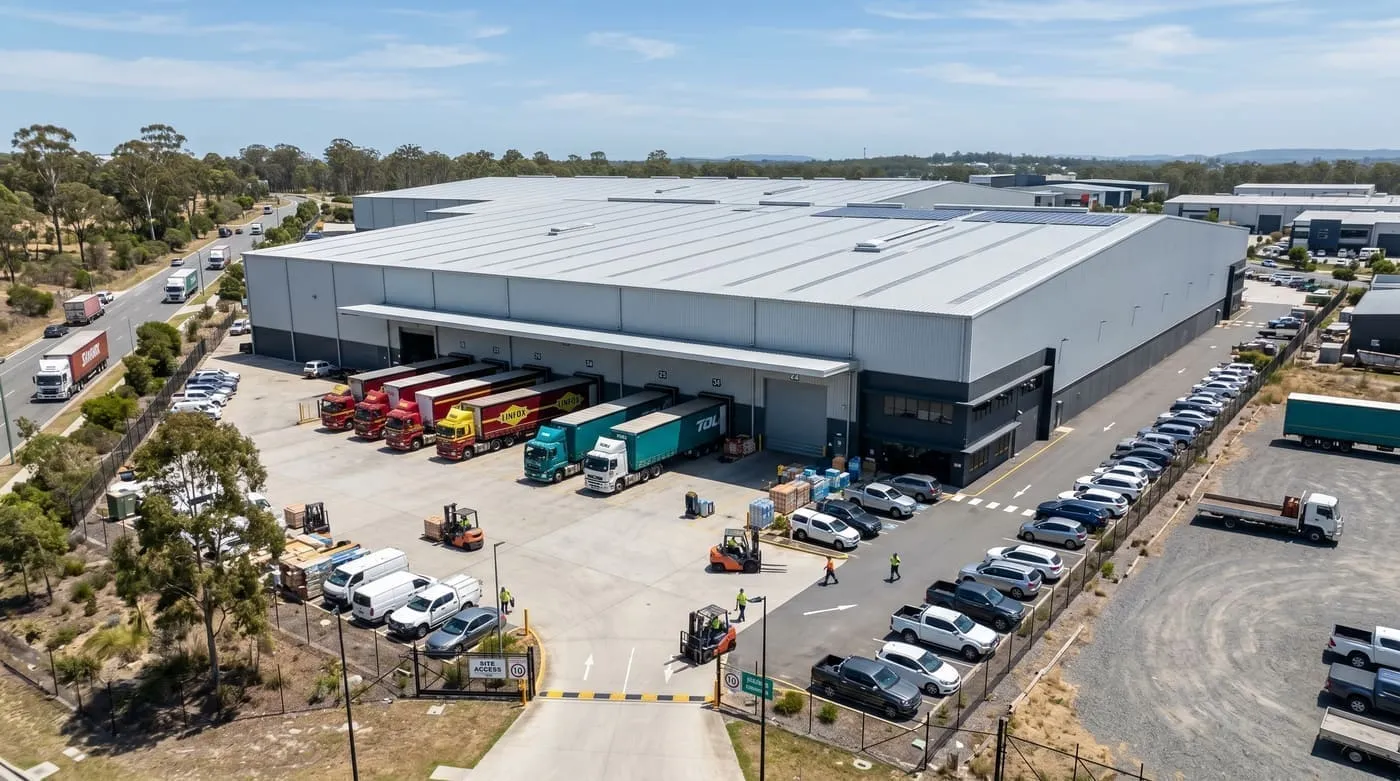
Commercial and industrial roofs are usually large, low-pitched and made of long metal sheets — exactly the kind of roof where small faults spread quietly over a big area before anyone notices. A low pitch means water drains more slowly and pools more easily, so a blocked box gutter or a tired flashing causes trouble faster than it would on a steep house roof. The sheer size means there’s a lot of surface, a lot of fixings, a lot of penetrations for vents, units and skylights — and every one of those is a potential entry point for water.
On top of that, what’s underneath a commercial roof is often valuable and vulnerable: stock, equipment, machinery, records, or a shopfront full of customers. A leak that would be an inconvenience in a house can shut down operations, ruin inventory or trigger a safety issue in a commercial setting. The stakes are simply higher, which is the whole argument for staying ahead of problems rather than reacting to them. Our commercial roofing work is built around keeping businesses watertight and trading.
What a commercial maintenance program involves
A proper program is planned and regular, not a one-off when something goes wrong. The core of it is a scheduled inspection — typically once or twice a year, plus a check after any major storm — that works methodically across the whole roof. A thorough inspection covers:
- The roof sheeting — looking for rust, corrosion around fixings, dents, and any sheet that’s lifted, split or no longer sitting flat.
- Fixings and fasteners — checking for screws that have backed out, perished washers, and loose or missing fixings, which are a leading cause of leaks on big metal roofs.
- Box gutters, valleys and downpipes — clearing debris and checking for rust, ponding and blockages, because drainage failures are the most common and most damaging commercial roof problem.
- Flashings and penetrations — every join, vent, skylight, air-conditioning unit and pipe penetration, where seals and flashings degrade and let water in.
- The roof coating — assessing whether the protective coating is wearing out and the roof is due for recoating before bare metal starts rusting.
From there, small faults are fixed on the spot or scheduled before they grow — refixing fasteners, resealing flashings, clearing gutters, treating early rust. The whole point is to catch problems while they’re cheap and contained.
What regular maintenance catches early
The value of maintenance is in the problems it stops from happening. A blocked box gutter found and cleared in autumn doesn’t overflow into the building during the summer storms. A few backed-out screws refixed at an inspection don’t become a hundred small leaks across the roof. Early surface rust treated and recoated doesn’t eat through the sheet and force a sheet replacement. A lifted flashing resealed doesn’t let a season of rain into the ceiling and the stock below.
Every one of these is a small, low-cost job when it’s caught early — and a major, disruptive, expensive one when it’s ignored until it fails. That’s the core economic case for maintenance: you’re trading a modest, predictable annual cost for the avoidance of large, unpredictable, business-interrupting ones. It’s the same logic as servicing a vehicle rather than driving it until it breaks down.
Why it pays for itself
The return on commercial roof maintenance comes from several directions at once. The most obvious is avoided repair costs — catching faults small rather than large. But there’s more to it. A maintained roof lasts significantly longer before it needs replacing, which pushes a major capital expense years into the future. Recoating a sound roof at the right time is a fraction of the cost of re-roofing one that’s been left to rust through.
Then there’s the business cost of failure, which is often the biggest number of all. A leak over a warehouse can write off stock; a leak over a workshop can stop production; a leak over a shop can close it for repairs. Downtime, damaged goods and emergency call-outs dwarf the cost of a planned inspection. Maintenance also keeps you ahead of insurance and compliance expectations — insurers look more favourably on a roof that’s demonstrably maintained, and you’ve got records to show it. Add it up and a maintenance program isn’t a cost centre; it’s one of the cheaper forms of risk management a building owner has.
The storm-season angle on the Downs
Commercial roofs on the Darling Downs cop the same brutal storm season as everything else up here — large hail, fierce winds and torrential rain rolling off the range, often with little warning. A big, low-pitched commercial roof is exposed to all of it, and the time to find the weak points is before the storms, not during them. A pre-season inspection that clears the box gutters, tightens the fixings and sorts any tired flashings is some of the best-value maintenance you can do, because it closes the doors a storm would otherwise walk straight through. Our season-by-season maintenance checklist covers the rhythm of it, and the same logic scales up to a commercial roof.
What a maintenance program looks like in practice
A good program isn’t just turning up and looking — it’s documented, so you build a record of your roof’s condition over time. After each inspection you should get a report: what was checked, what was found, what was fixed on the spot, and what needs scheduling. Photos of any problem areas matter here, both so you can see what you’re paying for and so there’s a clear history if an insurance question or a dispute ever comes up. Over a few years that record tells you whether the roof is holding steady or trending toward needing a recoat or replacement, which lets you budget for major work rather than being ambushed by it.
The other practical piece is responsiveness between scheduled visits. A maintenance relationship means there’s a roofer who already knows your building when something does go wrong — they’re not starting from scratch tracing a leak on a roof they’ve never seen. For a business, that difference can be hours rather than days of disruption when a storm finds a weak spot. The program and the relationship together are what turn the roof from an unpredictable liability into a managed, known asset.
Restoration versus replacement on a commercial roof
A well-maintained commercial roof gives you options when it does start to age, and the big one is restoration rather than replacement. A large metal commercial roof that’s structurally sound but showing surface rust and a tired coating can often be cleaned, have its rust treated and its fixings sorted, and be recoated — much like a house roof restoration, scaled up. That’s a fraction of the cost and disruption of stripping and re-sheeting the whole roof, and it can buy many more years of service.
The catch is that restoration only stays on the table while the roof is sound. Once rust has eaten through sheets, or drainage failures have rotted structure, you’ve lost that option and you’re into a full re-roofing — a much bigger spend and a much bigger disruption to whatever’s trading underneath. This is the quiet financial argument for maintenance: it doesn’t just avoid repairs, it preserves the cheaper restoration path and pushes the expensive replacement years down the road. A neglected roof forecloses its own cheaper options.
Common questions about commercial roof maintenance
How often should a commercial roof be inspected? For most commercial and industrial roofs on the Downs, twice a year is sensible — once heading into storm season and once after — plus an inspection following any major storm. Large, complex or older roofs, and anything that’s been neglected, are worth checking more often.
Isn’t it cheaper to just fix things when they break? Almost never, once you count the full cost. Reactive repairs come with emergency premiums, more extensive damage by the time you’ve noticed, and the business disruption of a failure — lost stock, downtime, closures. Planned maintenance catches the same fault for a fraction of the cost, before it does any of that.
Can a commercial roof be restored rather than replaced? Often, yes. A structurally sound commercial roof that’s tired and showing surface rust can frequently be cleaned, repaired and recoated for far less than a full replacement — much like a roof restoration on a house, scaled up. Maintenance is what keeps that option open; a roof left to rust through loses it.
What’s the most common commercial roof problem you see? Drainage, by a distance. Blocked or undersized box gutters and valleys that can’t cope with a Downs downpour back water up under the sheeting and into the building. Most serious commercial leaks we attend trace back to drainage that wasn’t kept clear, which is exactly what regular maintenance prevents.
Protect the roof, protect the business
A commercial roof is a major asset and the first line of defence for everything and everyone underneath it. Looking after it on a planned schedule is one of the most straightforward ways to avoid expensive surprises and keep the business trading through whatever the Downs weather throws at it. We handle commercial roofing and maintenance for businesses across Toowoomba and the wider Darling Downs, and we can set up a maintenance schedule that fits your building and your operations. Get in touch for an inspection and an honest assessment of where your roof’s at.