If the shaded side of your roof has gone green, black or crusty with grey-green growths, you’ve got moss and lichen — and you’ve probably wondered whether cleaning it off is worth the bother or just vanity. It’s a fair question. The honest answer is that it’s usually more than cosmetic, but it’s also a job that’s easy to do badly. Here’s a straight look at why moss and lichen turn up on Darling Downs roofs, what they actually do, and when cleaning is worth the money.
Quick answer: Roof cleaning is usually worth it, because moss and lichen are more than cosmetic — they hold moisture against the roof surface, lift tiles, block gutters, and slowly shorten the roof’s life. Removing them protects the roof and improves how the house looks. The catch is that it must be done correctly: low-pressure or soft-wash methods and the right treatment, not aggressive high-pressure blasting that strips coatings and cracks tiles. On a sound roof, professional cleaning is good-value preventive maintenance.
Why your roof grows moss and lichen
Moss and lichen need three things: moisture, shade and a surface to grip. Plenty of Darling Downs roofs offer all three, especially on the southern and shaded faces that don’t get much sun to dry them out. Up here, the cool nights and morning dew, the leaf litter from overhanging trees on the leafier streets, and the humidity through the wet season all keep parts of a roof damp for longer than they should be. That’s an open invitation.
Tile roofs are the usual victims, because the textured, slightly porous surface gives moss and lichen something to hold onto and traps moisture. Older tiles whose glaze has worn are especially prone. Metal roofs grow less of it, though a tired, chalky coating on a shaded metal roof can host lichen too. Trees make everything worse — they drop organic matter that feeds the growth and cast the shade that keeps it damp. If your roof is green only on one side, that’s almost always the shaded, tree-side face.
What moss and lichen actually do to a roof
This is where it stops being just about looks. The real problem is moisture. Moss in particular acts like a sponge — it holds water against the surface of your tiles long after the rain has stopped and the sun would otherwise have dried them. A roof that stays damp degrades faster: the constant moisture works into hairline cracks, accelerates the breakdown of the surface, and on tile can contribute to tiles becoming brittle and porous over time.
Moss also lifts. As clumps grow thicker, they can get under the edges and overlaps of tiles, and in a freeze that trapped moisture expands — more on that below — prising at the tile. Loosened, lifted growth and the debris it traps can also block the flow of water across the roof and into the gutters, backing water up where it shouldn’t go. Lichen is slower and more tenacious; it grips hard and its acids slowly etch the surface it grows on. None of this is dramatic week to week, but over years, a roof left to grow a thick mat of moss and lichen ages noticeably faster than a clean one. The growth itself is a sign the roof is staying wetter than it should — and a wet roof is a roof wearing out early.
So is cleaning worth it?
For most tile roofs carrying a real layer of moss and lichen, yes — cleaning is worth it, for three reasons. First, it removes the moisture trap and lets the roof dry properly between rains, which slows its ageing. Second, it’s the necessary first step before any coating or restoration, because nothing new sticks to a dirty, mossy roof — so if you’re planning to recoat anyway, the clean isn’t optional. Third, it transforms how the house looks; a roof is a huge part of a home’s street appeal, and a clean one can take years off the look of a place, which matters if you’re selling.
Where it’s less clear-cut is a roof with only light, patchy growth on a surface that’s otherwise sound and not due for any other work. In that case a clean is mostly cosmetic and you can reasonably defer it. The judgement call is really about how much growth there is and whether it’s holding enough moisture to matter — which is exactly the kind of thing worth getting an honest opinion on rather than being talked into a clean you don’t need. A proper roof cleaning should come with a straight assessment of whether your roof actually needs it.
The right way to clean a roof — and the wrong way
Here’s the catch: roof cleaning is easy to get wrong, and a botched clean does more harm than the moss. The two main methods are pressure washing and chemical treatment, and the skill is in using them appropriately.
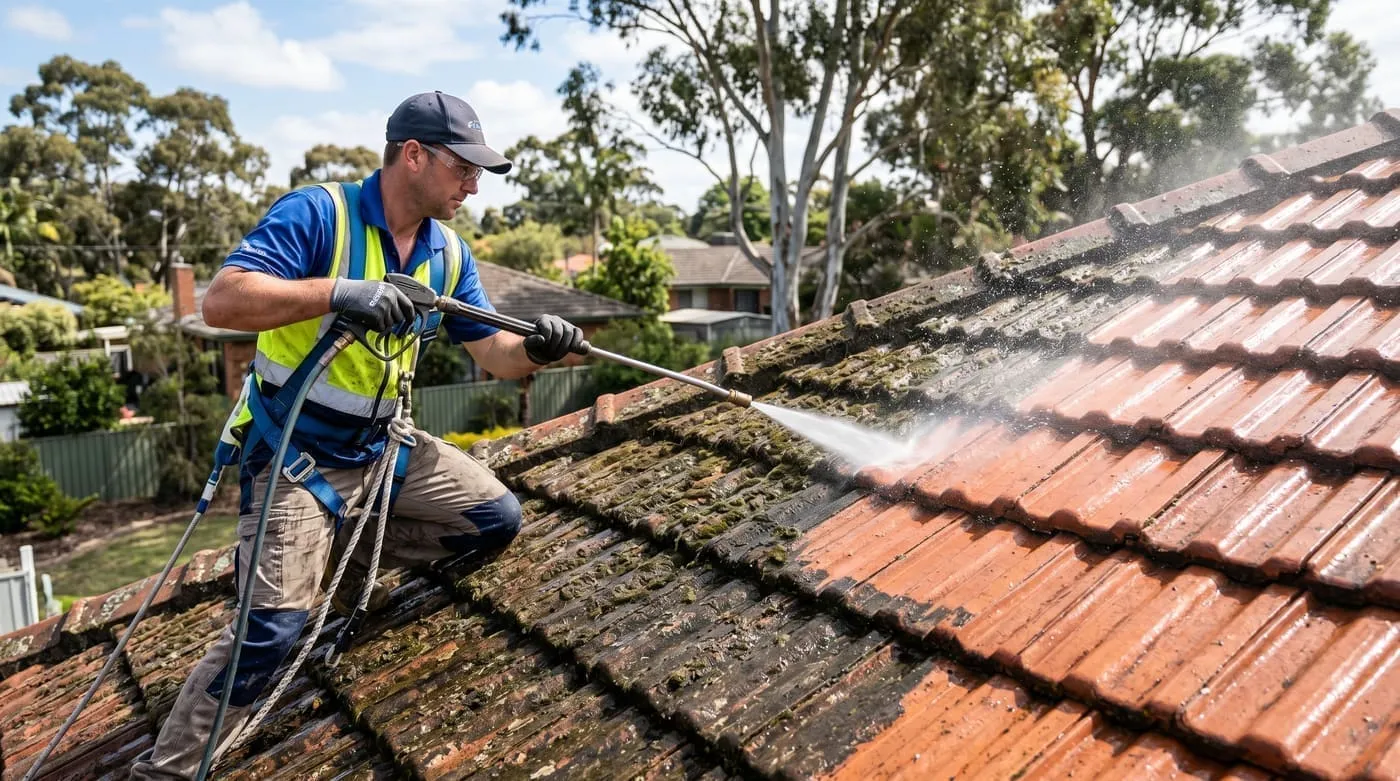
Pressure washing physically blasts off the moss, lichen, dirt and any flaking old coating. Done at the right pressure by someone who knows what they’re doing, it’s effective and safe. Done with too much pressure or the wrong technique, it can crack tiles, strip protective coating, force water up under the overlaps and into the roof space, and chew up an already-tired surface. This is not a job for an enthusiastic amateur with a hired pressure washer and a ladder.
Chemical or biocidal treatments kill the moss and lichen at the root so they don’t grow straight back, and they’re gentler on the surface. Often the best result combines the two — treat, then wash — and on a roof you’re about to restore, the clean leads straight into the repair and coating stages. The wrong approach, by contrast, can leave you with cracked tiles, a stripped surface and moss that’s back within a year. Method matters as much as the cleaning itself.
Why you shouldn’t DIY it
Beyond the risk of damaging the roof, there’s the obvious one: a wet, mossy roof is one of the most slippery and dangerous surfaces you can stand on, and moss makes it dramatically worse. Roof falls cause serious injuries every year, and a mossy tile roof on a damp morning is about the worst footing there is. Add a pressure washer’s recoil and a ladder into the mix and it’s a genuinely risky combination. This is firmly a job to leave to someone with the harness, the experience and the insurance — the cost of a professional clean is nothing next to the cost of a fall.
Keeping it from coming back
A clean roof won’t stay clean forever if the conditions that grew the moss are still there, so it’s worth tackling the cause as well as the symptom. Trimming back overhanging branches lets more sun and air onto the shaded faces, which is the single most effective thing you can do to slow regrowth — drier roofs grow far less moss. Keeping gutters and valleys clear of leaf litter stops the organic matter that feeds it from accumulating. And a biocidal treatment as part of the clean buys you longer before it returns than a wash alone.
It’s also worth folding a roof check into your regular maintenance rhythm so growth gets dealt with while it’s light rather than after it’s built into a thick mat. Our season-by-season maintenance checklist covers when to look, and a clean is a natural thing to bundle in if you’re already having a restoration done.
Common questions about roof cleaning
Will moss come back after cleaning? Eventually, if the conditions that caused it remain — shade, moisture and organic debris. A biocidal treatment slows regrowth considerably, and trimming back trees to let sun onto the roof slows it further. A wash with no treatment and no change to the conditions will green up fastest.
Can I just leave the moss — is it really doing harm? Light growth on a sound roof isn’t urgent. But a real layer of moss holds moisture against the surface and ages the roof faster, and it only thickens over time. Leaving a heavy mat of moss and lichen for years genuinely shortens a roof’s life, so it’s not purely cosmetic once there’s a decent amount of it.
Does roof cleaning damage the roof? Done properly, no — done badly, yes. Excessive pressure or the wrong technique can crack tiles, strip coating and drive water inside. That’s exactly why it’s worth having someone who knows the right pressure and method for your roof type rather than DIY-ing it with a hired washer.
Should I clean or restore? If the roof is sound and just dirty, a clean is enough. If the coating is failing, there’s surface rust, or there are cracked tiles and tired pointing, you’re better off with a restoration — which includes the clean as its first stage. We’ll tell you honestly which one your roof needs.
Get an honest opinion first
Roof cleaning is genuinely worthwhile on a mossy, lichen-covered roof — but only done the right way, and only when the roof actually needs it. The smart first step is a look from someone who’ll tell you straight whether a clean is worth your money or whether your roof needs more (or less) than that. We clean and assess roofs across Toowoomba and the wider Darling Downs, and we won’t sell you a clean you don’t need. Get in touch for an honest assessment.