
A bit of routine attention is the cheapest roofing money you’ll ever spend. Roofs that get looked after last years longer and avoid the nasty, expensive surprises. Here are seven practical maintenance tips for Toowoomba and Darling Downs homes — and an honest note on what to leave to a professional.
Quick answer: The most valuable roof maintenance for a Toowoomba home is keeping gutters and downpipes clear, checking flashings and ridge capping, watching for rust, cracked or slipped tiles, clearing moss and debris, trimming overhanging branches, and getting a professional inspection every year or two. Most of this is twice-yearly preventive work — do it before storm season and you catch small faults while they’re cheap, rather than after they’ve become a leak.
1. Keep your gutters clear
Blocked gutters overflow, sending water where it shouldn’t go — down walls, behind fascia, against foundations. Clear them at least twice a year, more often if you’ve got trees nearby. Sick of the chore? Gutter guard largely solves it.
2. Check after every big storm
The Downs gets serious storms, and they’re the number-one cause of roof damage. After a big one, do a ground-level check — look for displaced sheets or tiles, dented gutters and debris. (Don’t climb up; see tip 7.)
3. Watch your ceilings
Your ceilings are an early-warning system. New stains, damp patches or flaking paint mean water’s getting in. Catch a leak early and it’s a cheap fix; ignore it and you’re paying for a ceiling too.
4. Keep an eye on the ridge capping
On tile roofs, cracked and crumbling mortar on the ridge caps is the most common leak source. If you can see gaps or missing mortar from the ground, it’s time for re-pointing.
5. Trim overhanging branches
Branches drop leaves into gutters, scrape the roof in wind, and become missiles in storms. Keep them trimmed back from the roofline.
6. Don’t ignore rust or fading
Surface rust on metal and heavy fading both signal that the protective coating is failing. Addressed early with a restoration or recoat, it’s straightforward; left alone, rust eats right through.
7. Leave the climbing to the pros
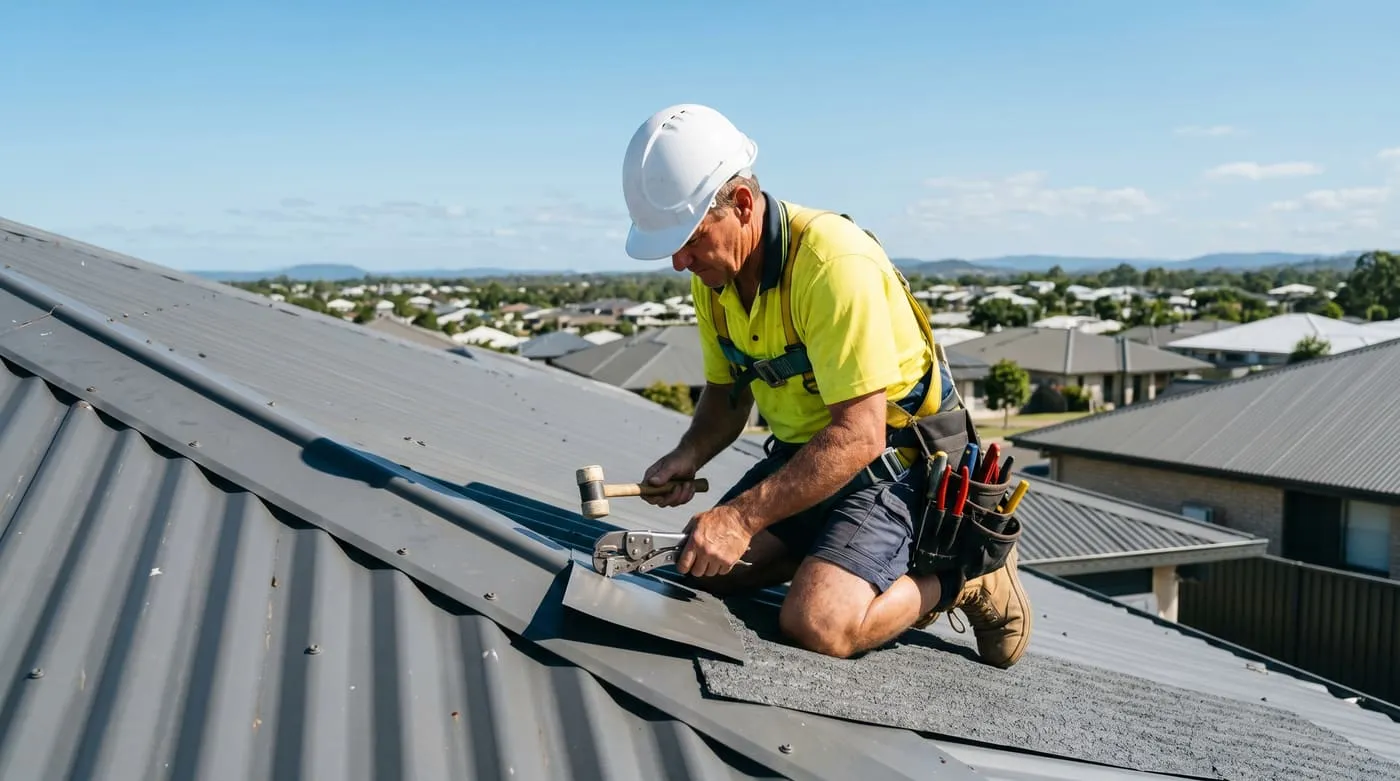
This is the big one. Roofs are dangerous — falls cause serious injuries every year. Do your checks from the ground with binoculars, and leave anything that involves getting on the roof to someone with the gear, the training and the insurance.
How to actually do a ground-level inspection
A useful inspection is more than a glance up at the roof on your way to the car. Pick a clear morning, grab a decent pair of binoculars, and walk the full perimeter of the house. Work around it methodically so you cover every face of the roof, not just the bit you can see from the driveway.
Start with the gutter line. Look for sagging sections, rust streaks running down the fascia, and any spot where the gutter has pulled away from the house. Then scan the roof field itself — on tile, you’re hunting for slipped, cracked or chipped tiles and any patch of differently coloured tiles that suggests a past repair. On metal, look for lifted sheet ends, popped or missing screws, surface rust around fixings, and any sheet that’s no longer sitting flat.
Next, follow the ridge lines and hips, where the capping sits. This is where most leaks begin, so give it proper attention. Finish by checking the flashings around the chimney, vents, skylights and anywhere the roof meets a wall. Rusted or lifted flashing here is a classic Toowoomba leak point. Inside, walk the top floor on a bright day with the lights off and look for daylight or stains in the ceiling, then check the eaves and any exposed roof timbers in the manhole space for damp, mould or sunlight coming through. Take a photo of anything that looks off so you can compare it after the next storm.
Common Toowoomba roof problems to watch for
Roofs on the Downs cop a specific set of stresses, and knowing what they are makes your checks far more useful. The big swings between hot days and cold nights up on the range make materials expand and contract constantly, which works fixings loose and opens up hairline cracks in old ridge mortar over time. That’s why pointing that looked fine three years ago can suddenly start letting water through.
Hail is the other big one. Even moderate hail dents metal sheeting and gutters and can crack the surface of tiles, and that damage often isn’t obvious from the ground until the next heavy rain finds it. Older terracotta and concrete tile roofs across the established Toowoomba suburbs are particularly prone to cracked tiles and tired ridge capping, while the metal roofs common on newer estates and rural Darling Downs properties tend to show their age through surface rust, failed fixings and faded coatings. Trees are a constant on the leafier streets — gum leaves and seed pods block gutters and valleys fast, and overhanging limbs scrape coatings off and drop branches in every storm.
The real cost of putting it off
The reason maintenance is worth the bother is simple: small problems get expensive fast when you ignore them. A cracked ridge cap or a single slipped tile is a minor, low-cost fix on its own. Leave it, though, and water gets into the roof space. From there it soaks insulation, stains and eventually collapses sections of ceiling, rots timber battens and rafters, and creates the damp conditions mould loves.
What started as a cheap repair becomes a ceiling replacement, timber repairs and a mould problem — many times the cost, and a far bigger disruption to your house. The same goes for rust on a metal roof: treated when it’s just surface bloom, it’s a straightforward restoration job; left until it eats through the sheet, you’re into replacing roofing sheets and dealing with leaks in the meantime. Catching things early isn’t just tidier — it’s genuinely cheaper.
DIY versus calling a professional
Plenty of roof maintenance is fine to handle yourself, as long as your feet stay on the ground. Clearing leaves from gutters you can reach safely from a stable ladder, trimming branches back from the roofline, doing your regular ground-level inspections and keeping an eye on your ceilings are all sensible DIY jobs. They cost nothing but a bit of time and they head off most of the expensive problems.
Where the line falls is anything that involves getting onto the roof or working at height. Walking a roof safely takes the right harness, anchor points and experience — a roof is steeper and more slippery than it looks, and tiles crack underfoot if you don’t know where to step. Re-bedding and re-pointing ridge caps, replacing sheets or tiles, treating rust, sealing flashings and chasing down a leak are all jobs for someone with the gear, the training and the insurance. If a task means leaving the ground, that’s the signal to pick up the phone rather than the ladder.
Common questions about roof maintenance
How often should I have my roof professionally inspected? For most Toowoomba homes, a professional look every couple of years is sensible, plus a check after any major storm. Older tile roofs, homes surrounded by trees and anything that’s been neglected for a long time are worth checking more often. For a month-by-month rhythm to work to, see our season-by-season roof maintenance checklist.
Can’t I just wait until something leaks? You can, but it’s the most expensive way to own a roof. By the time water shows up inside, the damage in the roof space is usually well underway. The whole point of maintenance is to catch the problem while it’s still a five-minute fix rather than a ceiling repair.
Does a maintained roof really last longer? Yes, noticeably. Clearing gutters, fixing small faults promptly and recoating before the protective layer fails all add years to a roof’s working life. A neglected roof on the Downs can fail a decade earlier than an identical one that got a bit of routine care.
My roof looks fine from the ground — is that enough? Ground checks catch a lot, but not everything. Hail damage, hairline tile cracks and early rust around fixings often only show up close-up. If it’s been years since anyone got on the roof properly, a professional inspection is worth it even when nothing looks wrong from below.
Tile roofs versus metal roofs: what each one needs
The maintenance routine shifts a bit depending on what’s over your head. Tile roofs — common across the older established suburbs of Toowoomba — live or die by their ridge capping. The mortar bedding the caps cracks and crumbles over the years as the roof heats and cools, and once it does, water runs straight in. Slipped and cracked individual tiles are the other recurring issue, often caused by foot traffic, falling branches or hail. The tiles themselves can last a very long time, so most tile maintenance is really about keeping the pointing sound and replacing the odd broken tile before it leaks.
Metal roofs, which dominate the newer estates and rural Darling Downs properties, fail in different ways. The enemies are rust and fixings. Surface rust starts wherever the protective coating has been scratched, scrubbed thin or breached, and around screw heads where moisture sits. Fixings themselves work loose or back out over time, especially with the constant expansion and contraction up on the range, leaving small gaps for water and wind to exploit. Faded, chalky coating is the visible sign that the protective layer is wearing out and the roof is due for a recoat. Knowing which type you’ve got tells you what to look hardest for on each inspection.
When to call a roofer
Book a professional inspection if you spot leaks, rust, cracked tiles or storm damage — or simply if it’s been years since anyone looked. A quick inspection catches small problems while they’re still cheap. We’re happy to take a look and tell you honestly how your roof’s tracking — whether you’re in Toowoomba itself or out across the wider Darling Downs.