It’s the big roofing decision, and it usually comes down to one question: is your roof structurally sound, or is it worn out? Get that right and the answer falls out naturally. Here’s how to think it through.
Quick answer: Restore your roof if it’s structurally sound but tired — a restoration (clean, repairs, re-pointing or refixing, and a fresh coat) costs roughly $3,000 to $8,000 and adds 10 to 15 years. Replace it if it’s genuinely worn out: widespread rust or rot, structural sagging, perished sarking, or persistent leaks no patching fixes. Replacement costs far more (around $12,000 to $25,000 for metal) but is the honest answer once a roof is past saving. The deciding factor is structural condition, not surface looks.
When restoration is the right call
A roof restoration — clean, repair, re-bed, re-point and re-coat — is the smart choice when your roof is tired but fundamentally sound. Signs you’re a restoration candidate:
- The roof is faded, chalky or stained but the structure is solid
- A few leaks or slipped tiles, not widespread failure
- Cracked ridge-cap pointing that needs redoing
- The roof is 15+ years old but has never been properly maintained
Restoration costs a fraction of replacement and buys you another 10–15 years. For most roofs that aren’t actually falling apart, it’s the better-value option.
When replacement is the right call
A replacement is unavoidable when the roof is genuinely past it:
- Widespread rust on metal, or cracked and porous tiles throughout
- Sagging or rotten structural timber
- Leaks in many places, with repairs no longer holding
- An old asbestos roof you want gone
- You’re renovating and want it all to match
Coating over a dying roof just hides the problem and wastes money — no honest roofer should sell you a restoration on a roof that needs replacing.
The cost difference
Restoration is typically a fraction of a full re-roof. That’s exactly why the temptation runs both ways: some homeowners try to restore a roof that’s beyond it (false economy), and some roofers quote a replacement on a roof that just needs restoring (overselling). The fix for both is an honest inspection. For real figures on each, see our roof restoration cost guide for Toowoomba and our roof replacement cost guide for QLD.
What each job actually involves
It helps to know what you’re comparing, because “restoration” and “replacement” are very different days on site.
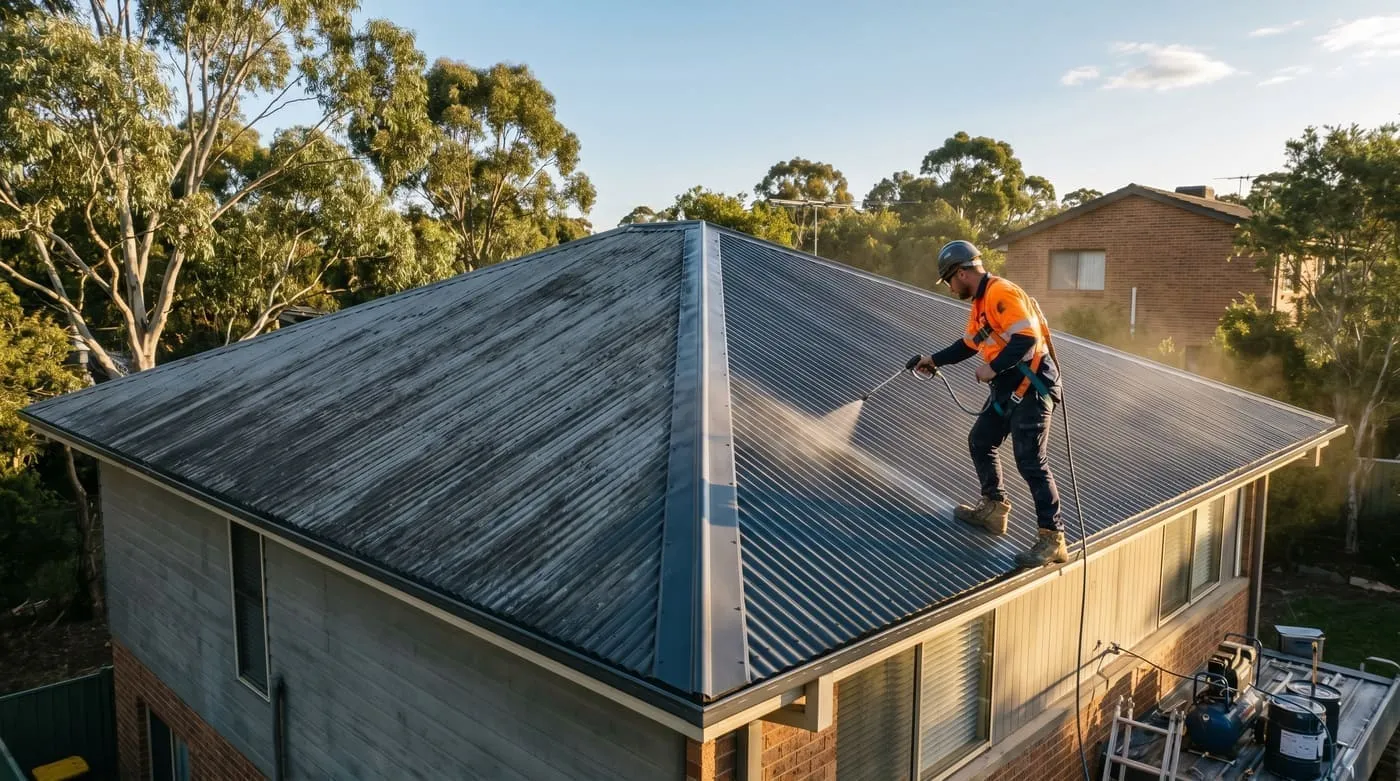
A restoration leaves your existing roof in place and brings it back to health. On a tile roof that’s a high-pressure clean, replacing any broken tiles, re-bedding and re-pointing the ridge caps, then applying a sealer and two or three coats of a quality membrane. On metal, it’s a clean, treating any surface rust, replacing fasteners and damaged sheets where needed, and re-coating. It’s largely a surface-and-detail job, and most homes are done in a few days with no major disruption inside.
A replacement — or a full re-roof — strips the old roof off and puts a new one on. That means exposing the structure, replacing the battens or sarking if they need it, and laying all-new material. It’s a bigger job, it costs more, and there’s a window where your roof is open, but you finish with a genuinely new roof and a fresh warranty rather than a refreshed old one. Many Darling Downs homeowners use a replacement as the chance to switch from tile to Colorbond — we cover that in our tile to metal conversion cost guide.
The age and material question
Age alone doesn’t decide it, but it shifts the odds. A tile roof that’s 20 years old and never been touched is often a strong restoration candidate — the tiles themselves can last 50 years, it’s the bedding, pointing and surface that wear out, and those are exactly what a restoration renews. A metal roof tells a different story: once the steel itself is rusting through rather than just surface-spotting, no amount of coating fixes it, and replacement becomes the honest answer. Our piece on how long a Colorbond roof lasts gives a sense of the timelines involved.
The Darling Downs climate matters here too. Our big temperature swings — hot days, cold nights, the odd frost up around Crows Nest and the higher country — work joints and pointing harder than a milder coastal climate would. That’s part of why ridge-cap pointing cracks are such a common trigger for restoration work locally. If you want the bigger picture on what survives our conditions, the best roof for the Queensland climate is worth a read.
How to decide with confidence
Get someone reputable up on the roof to assess the structure, not just the surface, and show you photos of what they find. That single inspection answers the question. We do it free, and we’ll give you the straight call either way — including when the cheaper option is the right one.
A simple way to think it through
If you’re trying to make the call before anyone’s been out, run your roof through a few plain questions. Is the structure underneath sound, or is there sag, rot or rust eating into the steel itself? Are the problems patchy — a few cracked tiles, some tired pointing — or widespread across the whole roof? Are you planning to stay in the house long enough to get value from a new roof, or just keep it weatherproof for a handful of years? And is the roof material itself near the end of its natural life, or just overdue a tidy-up?
Lean toward restoration when the structure is sound, the problems are localised, and you mainly need the roof watertight and looking good again. Lean toward replacement when the failures are widespread, the structure or the metal itself is going, or you’re committing to the home long-term and want decades rather than another ten or fifteen years. There’s a middle ground too: sometimes the right answer is targeted roof repairs now and a bigger decision down the track.
Common questions
Can a restoration buy me time before a replacement? Sometimes, yes — if the roof is borderline but the structure’s holding, a restoration can give you a few more years to budget for the bigger job. But it has to be an honest borderline, not a roof that’s clearly finished. We’ll tell you which it is.
Will restoration fix a leak permanently? A proper restoration fixes the leaks it covers — cracked tiles replaced, pointing redone, the surface sealed. What it can’t do is fix a leak caused by failing structure or rusted-through metal; that’s a replacement conversation.
Is replacement ever cheaper in the long run? It can be, if you’d otherwise be restoring a roof that’s only going to fail again soon. Spending a fraction on a restoration is only good value when the roof has real years left in it. Throwing money at a dying roof is the false economy we warn people about.
What a proper inspection should tell you
A useful inspection doesn’t just glance at the surface. The roofer should get up there safely, check the structure — battens, framing, signs of sag or rot — not only the tiles or sheets. On tile they should look at the bedding and pointing, the valleys and the ridge caps; on metal they should check whether rust is surface-level or eating through, and look hard at the fasteners and flashings. They should check the underside from the roof cavity where they can, because a lot of the truth about a roof is visible from inside. And critically, they should show you photos of what they found, so the recommendation isn’t just “trust me”.
That last point is how you tell an honest assessment from a sales pitch. If someone recommends a full replacement but can only show you a faded surface and no structural problem, push back. If they recommend a restoration on a roof that’s visibly rusting through, push back the other way. The photos should match the recommendation. Our signs you need a new roof guide covers the red flags worth knowing before anyone climbs up.
Don’t forget the gutters and the rest
One thing that catches people out: the roof decision often surfaces problems with the bits around it. If you’re restoring or replacing, it’s the natural time to sort out tired gutters and downpipes, check the flashings, and think about roof ventilation if the roof space runs hot — which plenty do through a Toowoomba summer. Bundling that work in while access is already set up is usually cheaper than coming back for it later, and it’s part of why an inspection that looks at the whole system, not just the roof surface, is worth having.
A few more common questions
Can I restore part of the roof and replace another part? Occasionally — for example, replacing a badly rusted section of metal while restoring the rest. It’s not common, and it only makes sense when the damage is genuinely confined to one area. More often a roof that’s failing in one spot is showing its age everywhere, and a single decision across the whole roof is cleaner and better value.
Does a new roof add value when I sell? A sound roof — whether restored or replaced — removes a major worry for buyers and valuers, because the roof is one of the first things assessed. A full replacement gives you the strongest story (“new roof, new warranty”), while a restoration presents the home well for less outlay. Which is the better spend depends on how long you’re staying and what the home needs.
How long does each take on site? A restoration is usually a few days with little disruption inside. A replacement is a bigger job with a window where the roof is open, so it takes longer and needs more planning around weather. Neither should drag on with a properly organised crew.
The bottom line
Restore a sound-but-tired roof and you’ve made a smart, good-value call. Replace a roof that’s genuinely failed and you’ve avoided throwing money at a lost cause. The mistake in either direction is expensive — restoring a dead roof, or replacing one with years left in it. The way to avoid both is the same: a proper, honest inspection that looks at the structure and shows you the evidence.
Still on the fence? Read Are Roof Restorations Worth It? or just book a free inspection and we’ll tell you what your roof actually needs. We work right across Toowoomba, Highfields, Gatton and the wider Darling Downs, and we’ll give you the straight call either way.