Roofs rarely fail overnight. They give you warning signs for years — most people just don’t know what to look for. Here are seven signs your roof might be telling you it’s time, and what each one means.
Quick answer: The clearest signs you need a new roof are: leaks in more than one spot, widespread rust or corroded metal sheets, sagging rooflines or structural movement, large numbers of cracked, slipped or porous tiles, perished sarking and crumbling ridge-cap pointing, daylight or damp visible in the roof space, and rising repair bills that keep coming. One sign alone may only need a repair — but several together usually mean the roof is at the end of its life and replacement is the honest fix.
1. Leaks in more than one spot
A single leak is usually a repair. Leaks popping up in several places, or coming back after repairs, suggest the roof’s waterproofing is failing across the board — a replacement conversation.
2. Widespread rust (metal) or cracking (tile)
Surface rust spots can be treated. But when steel is rusting through at the laps and fixings across the roof, or tiles are cracking and going porous everywhere, the material itself is at the end of its life.
3. Sagging
A roofline that dips or sags points to a structural problem underneath — rotten battens or beams, often from long-term water damage. That’s serious and needs proper assessment, not a coat of paint.
4. Daylight in the roof space
If you can see daylight through the roof from inside the cavity, water’s getting in too. Combined with damp timber or wet insulation, it’s a strong sign.
5. It’s simply old and never maintained
Roofs have a service life. If yours is decades old and has never been touched, it may be living on borrowed time even if it looks okay from the ground.
6. Repairs are stacking up
When you’re calling a roofer every storm season and the bills are adding up, those repair dollars might be better spent on a roof that ends the problem for good.
7. Rising energy bills
A failing, poorly insulated roof lets heat pour in during summer and out in winter. A new roof — with upgraded insulation and ventilation — can make a real difference to comfort and bills.
How to check your own roof safely
You don’t need to climb up to spot most of these warning signs — and we’d strongly prefer you didn’t. A pitched roof is a dangerous place for anyone without the right footing and gear, and a fall isn’t worth it. Here’s what you can check from the safety of the ground and inside the house:
- Walk the perimeter from the ground. Use your phone camera to zoom in on the ridge, the valleys and the edges. Look for rust streaks, lifted or slipped tiles, missing ridge-cap mortar, and any sheets that look buckled or out of line.
- Check the gutters and the ground after rain. Granules and grit washing out, or pooling water that won’t drain, point to problems. Sagging gutters pulling away from the fascia are another flag.
- Go into the roof space with a torch on a sunny day. Lights off, look for pinpricks of daylight, water stains on the timber, damp or compressed insulation, and any musty smell. Daytime is best because the daylight gives the leaks away.
- Look at your ceilings and cornices. Brown stains, bubbling paint, flaking plaster or a sagging spot all suggest water has been getting in for a while.
Make a note of what you find and where. Photos and rough locations make any later inspection faster and more accurate.
Repair, restore or replace?
Spotting a problem doesn’t tell you which fix you need, and the gap between them is large — both in cost and disruption. Here’s how the three options stack up:
- Repair is for isolated, contained problems: a single leak, a handful of cracked tiles, a corroded section of flashing. The rest of the roof is sound. This is the cheapest path and the right one most of the time. See roof repairs for the everyday fixes.
- Restoration suits a roof that’s structurally sound but tired all over — faded, lightly rusting, with bedding and pointing past their best. A roof restoration cleans, repairs, re-beds and recoats the whole roof for a fraction of a replacement, and buys you years. Our guide on restoration versus replacement digs into where the line sits.
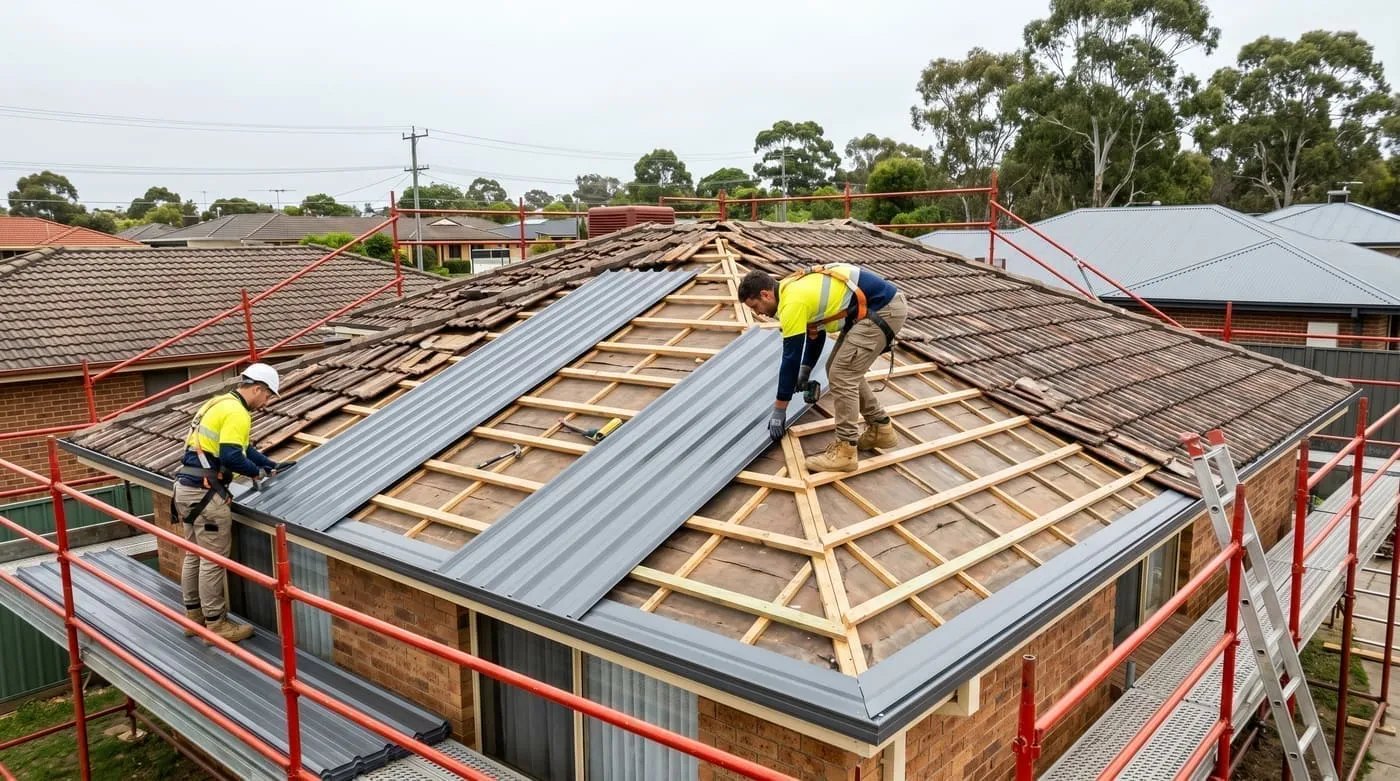
- Replacement is for a roof whose material or structure has genuinely failed — widespread rust-through, rotten battens, sagging, or repairs that keep coming back. At that point you’re throwing good money after bad patching it, and a full re-roof ends the problem.
The trap is paying for a restoration on a roof that needs replacing, or replacing a roof that only needed a restoration. An honest assessment is what tells the two apart.
What to do next
Seeing one or two of these doesn’t automatically mean replacement — plenty of these signs point to a restoration instead. The only way to know is an honest inspection that checks the structure, not just the surface.
A few questions homeowners ask us
Could storm damage mean insurance covers a new roof? Sometimes. If your roof was damaged in a defined storm or hail event, your home insurance may cover repairs or, in bad cases, replacement of the affected areas. The key is that it’s sudden, event-based damage rather than gradual wear, which insurers don’t cover. We help homeowners across the Downs document and lodge these claims — our piece on making a roof insurance claim in QLD walks through the process, and our storm and insurance repairs service handles the work.
Do I need council approval to replace my roof? In most straightforward like-for-like replacements, no — but it depends on your property and any heritage or estate conditions. We cover the detail in our guide on council approval to replace a roof in QLD. We’ll flag anything that applies to your job before we start.
How long does a new roof take? A typical house re-roof is usually a matter of days, not weeks, depending on size, pitch, weather and whether there are structural repairs to do underneath. We’ll give you a realistic timeframe with the quote rather than a hopeful guess.
My roof looks fine from the ground — could it still need work? Yes, and this catches people out. Plenty of failing roofs look perfectly okay from the footpath while rusting at the laps, losing their pointing, or hiding wet insulation in the cavity. Age and what’s happening underneath matter more than the view from the street, which is exactly why a proper look-over is worth it even when nothing’s obviously wrong.
What should I ask a roofer before hiring them? Good question to ask before any big job. Licensing, insurance, written quotes and references all matter — we put together a full checklist in questions to ask a roofer before hiring.
What happens if you ignore the signs
It’s tempting to put a tired roof in the “deal with it later” pile, especially when nothing’s actively dripping. The problem is that roof issues compound. A small leak doesn’t stay a small leak — water tracks along timber, soaks insulation (which then stops insulating), rots battens and rafters, stains and eventually collapses ceilings, and creates the damp conditions mould loves. A job that would have been a cheap leaking roof repair becomes structural timber replacement plus internal repairs.
Rust works the same way. A few surface spots are easily treated; left for a few more wet seasons they eat through the steel at the laps and fixings until whole sheets need replacing. The Downs climate — big temperature swings, driving rain, the odd hailstorm — speeds all of this along on a roof that’s already compromised. Acting early is almost always the cheaper path. The most expensive roofs we replace are the ones where the warning signs were ignored for years.
Roof maintenance that buys you time
Plenty of roofs reach the end of their life early simply because nobody looked after them. A bit of routine care genuinely extends a roof’s working life and pushes back the day you need to replace it:
- Keep the gutters clear. Blocked gutters back water up under the edges of the roof, which is a leading cause of edge rust and fascia rot. A clean-out before and after storm season makes a real difference.
- Clear debris and overhanging branches. Leaves and sap trap moisture against the roof and feed lichen and rust. Trimming back branches also reduces hail-driven damage and the debris that clogs valleys.
- Get the odd professional once-over. A periodic inspection or maintenance visit catches small problems while they’re still small and cheap.
- Fix little things promptly. A single displaced tile or loose flashing is a quick fix today and a leak next storm if you leave it.
Our roof maintenance tips for Toowoomba go further into a simple routine that suits our local conditions.
The honest bottom line
Most of these seven signs, caught early, point to a repair or a restoration rather than a full replacement. The homeowners who end up needing a new roof are usually the ones who left the warning signs for years until the structure gave up. Acting on the first signs is how you keep a manageable repair from turning into a major replacement.
Spotting the warning signs on your roof? Book a free inspection and we’ll give you the straight answer — repair, restore or replace — for your specific roof, whether you’re in Toowoomba, Highfields or anywhere across the Darling Downs.